

Paper
Federica D’Alessandra
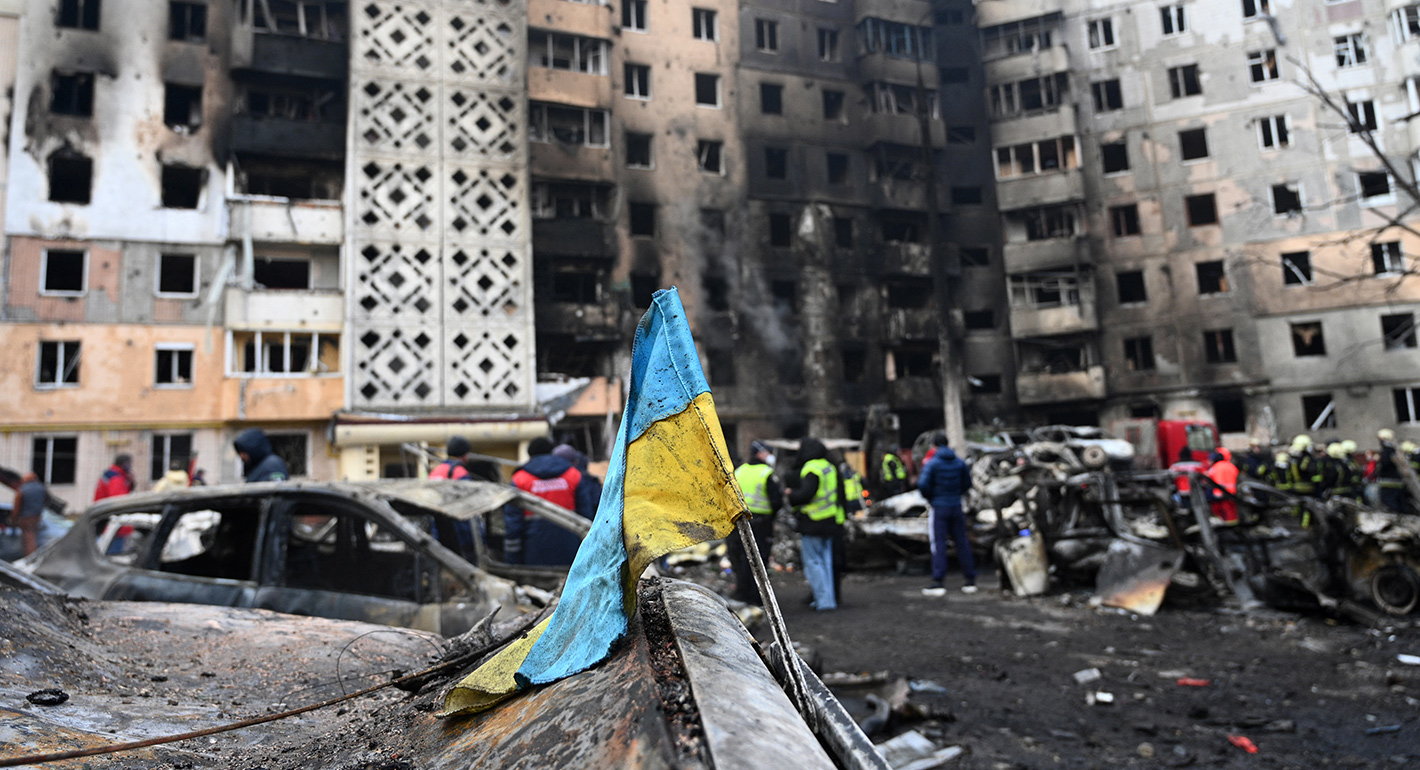
Source: Getty
As the war in Ukraine enters its fifth year, it is worth examining where accountability efforts currently stand, how U.S. policy on Russian aggression has shifted, and what the Ukrainian experience reveals about the challenges of holding international aggressors to account.
February 24, 2026, marked the fourth anniversary of Russia’s full-scale invasion of Ukraine, the largest land war on European soil since World War II. According to the United Nations, nearly 10 million Ukrainians have since become refugees or been displaced, with civilian casualties hovering near 58,930 at the time of writing.1 Large portions of Ukraine’s infrastructure—including housing, transport, energy, hospitals, and schools—have been destroyed under Russian bombardment, with total reconstruction and recovery needs currently estimated at $588 billion.2 Between 500,000 to 600,000 Ukrainian soldiers are also estimated to be dead, wounded, or missing, with independent reports placing Russian casualties at 1.2 million and as high as 35,000 per month.3 Without question, these numbers are tragic and are a somber reminder of the human cost of senseless wars of conquest and imperialist ambitions.
When Russia invaded four years ago, the unprovoked attack sent shockwaves around the world, becoming a watershed moment for Ukraine as a nation, for European continental security, and for world order more generally. The international community condemned the aggression almost in unison, but to no avail. In response, Ukraine and its partners mounted a military defense and have implemented a series of unprecedented measures aimed at holding Russia and its leaders accountable for the war and the myriad atrocities Russian troops have perpetrated to date.
During former U.S. president Joe Biden’s administration, the United States and Europe led a broad international coalition to support Ukraine politically, financially, and militarily. Importantly, they supported Ukraine’s quest to hold Russia legally and financially accountable. They imposed an unprecedented sanctions regime and a series of groundbreaking innovations in the legal and policy spheres aimed at upholding accountability and Ukraine’s rights under international law.
When President Donald Trump returned to the White House in January 2025, the United States reversed its policy, forsaking the quest for accountability and pivoting instead toward negotiations aimed at bringing the war to an end. Yet, despite these negotiations and the continuation of many accountability measures with the support of European countries and institutions, peace remains elusive.
As the war enters its fifth year, it is worth examining where these accountability efforts currently stand, how U.S. policy on Russian aggression has shifted, and what the Ukrainian experience reveals about the challenges of holding international aggressors to account. This reflection is crucial at a time when global order is shifting dramatically and powerful geopolitical actors, including the United States, are increasingly open about their expansionist aims and contempt for norms prohibiting the use of force.4
As the Ukraine experience proves, even with the U.S. government’s full backing, holding aggressors to account is no easy task. The path to accountability is fraught with countless policy, legal, and geopolitical roadblocks, including Trump’s U-turns. Nonetheless, the measures put in place by European and other states to confront Russia’s aggression demonstrate how an affected region can coalesce to confront international aggression—even when it is committed by a military and geopolitical heavyweight espousing revanchist ideologies on their doorstep. At a fraught geopolitical time when norms prohibiting the use of force among states seem to be eroding at an unprecedented pace, learning from the controversies, innovations, and experimentation of European and other states in the wake of Russia’s full-scale invasion thus remains essential, both as a testament to the resilience and innovation that are still possible in this area, and as a way to potentially help identify equally or more effective measures in other regions that might face similar security threats.
It is a remarkable testament to the value of international law that Ukraine continues to defend itself militarily while simultaneously pursuing all opportunities for a legal remedy.5 Although this stance comes with risks, Ukraine’s reliance on international law mechanisms, dating back to Russia’s 2014 illegal annexation of Crimea, illustrates its alignment with European values and democratic institutions anchored in the rule of law and creates a stark contrast between Ukraine, a law-abiding nation, and Russia, a “lawless” invader that started a war also in part to prevent said alignment.6
By appealing to international judicial processes and institutions wherever available, Ukraine is demonstrating its desire to resolve the dispute with Russia via peaceful means. This is particularly notable because Ukraine, as the victim of aggression, is not required to do so under international law, since it has an undisputed right to defend itself militarily. By pursuing all avenues, Ukraine is indirectly highlighting that Russia could do so as well and that in not exhausting all possibilities of nonmilitary recourse, Russia is legally responsible for its internationally wrongful acts.
By pursuing all avenues, Ukraine is indirectly highlighting that Russia could do so as well and that in not exhausting all possibilities of nonmilitary recourse, Russia is legally responsible for its internationally wrongful acts.
In addition, strategically, by seeking a just resolution of the war, Ukraine is making the case internationally that aggression is a serious matter of global concern. Through its lawfare campaign, the country is helping its supporters identify countermeasures that they can lawfully take against the Kremlin.7 Most importantly, by turning to international laws and institutions, Ukraine is laying the groundwork for redress—to establish the empirical truth, ensure judicial accountability, and claim reparations for both the Ukrainian state and individual victims.
Ukraine’s legal strategy has been unfolding domestically, regionally, and internationally. At the domestic level, Ukraine’s authorities are using all powers at their disposal to investigate and prosecute both Russian and Ukrainian nationals under relevant provisions of the Ukrainian Penal Code that criminalize aggression and other violations of the laws of war.8 As of late February 2026, the Office of the Prosecutor General of Ukraine had recorded over 210,000 alleged international crimes committed by Russian forces since the start of the full-scale invasion, with 180,000 specifically classified as war crimes—although the number of criminal cases could be significantly lower, given the possibility of duplicate entries and multiple allegations potentially relating to the same conduct.9
More than 240 Russian soldiers have already been convicted of war crimes in Ukrainian courts for offenses that include attacks against civilians, torture, sexual violence, destruction of infrastructure, and the illegal deportation of children.10 In addition, in 2024, Ukraine amended its Penal Code to further align with the Rome Statute of the International Criminal Court (ICC), so future cases might also be charged as crimes against humanity and extend liability under command responsibility.11 In their investigative and prosecutorial endeavors relating to Russian atrocities, Ukraine’s domestic authorities are being supported by an expert team of international investigators and prosecutors established in May 2022 by the European Union (EU), the United States, and the United Kingdom, in partnership with the government of Ukraine.12
Ukraine has also identified Russian nationals who might be prosecuted under its domestic definition of the crime of aggression. Its judicial system has precedent for prosecuting and convicting both Russian and Ukrainian nationals on this basis. For example, in 2016, Ukraine convicted two low-ranking Russian soldiers in its territory for violating article 437(2) of the Penal Code, as a result of entering Ukraine in 2014 and participating in hostilities in the Luhansk region.13 Under the same provision, Ukraine has also prosecuted and convicted in absentia its former president, Viktor Yanukovych, for being complicit in waging an aggressive war; he was found criminally liable for requesting that Russian President Vladimir Putin send troops into Ukraine after he was removed from office on February 22, 2014.14 Unlike war crime prosecutions, however, aggression prosecutions are challenging at the domestic level, particularly for holding high-level officials accountable.15 It is for this reason that Ukraine and its partners in the international community sought to establish an ad hoc aggression tribunal.
Ukrainian authorities are also receiving support from the EU Agency for Criminal Justice Cooperation (Eurojust), which facilitates a Joint Investigation Team with EU member states and the ICC and maintains the Core International Crimes Evidence Database, preserving, storing, and analyzing evidence of core international crimes gathered by European prosecutors.16 The Office of the Prosecutor General of Ukraine also receives direct bilateral support from several partners, including, until recently, the U.S. Department of Justice.
In addition to bilaterally supporting Ukraine’s judiciary, some partner countries are also carrying out proceedings pursuant to universal jurisdiction and other principles in their domestic courts. Universal jurisdiction allows states to prosecute and punish perpetrators of international crimes present on their territory, regardless of where the crimes might have been committed. Some countries have also brought proceedings based on the nationality principle, allowing them to assert jurisdiction on certain offenses if either the victim or perpetrator is a national or resident of their country. Many civil society organizations, including those previously funded by the U.S. Department of State, are assisting in these efforts by building dossiers and opening up new fronts for litigation in the region, including in countries such as Poland and Lithuania.
According to REDRESS, which publishes the Universal Jurisdiction Annual Review, as of April 2025, ninety-five criminal cases had been prosecuted in relation to Russian aggression and war crimes against Ukrainians across sixteen jurisdictions in Europe, Canada, the United States (where charges have been brought based on the personality principle rather than on universal jurisdiction basis), and Argentina.17
Technology and Ukraine’s civil society—led by groups such as the Center for Civil Liberties (awarded the Nobel Peace Prize in 2022), Truth Hounds, and Euromaidan SOS—are also playing a central role in the documentation of war crimes and other atrocities.18 As one of the most digitalized societies in Europe, Ukraine has exploited a range of technologies both in its warfare and in protecting civilians from military attacks.19 Ukraine is also employing a range of technologies to crowdsource digital evidence of war crimes, spurring innovation in the area of accountability.
Using their phones, Ukrainian civilians have collected, verified, and secured huge volumes of materials related to potential atrocities, including more than 55,000 videos, images, and audio using the eyeWitness to Atrocities app. The International Bar Association launched the app in response to the wave of citizens’ documentation during the Arab Spring, and it is now widely used in judicial settings across Ukraine.20 Social media platforms such as X (formerly Twitter), Meta (Facebook), TikTok, and Telegram are also being scraped to identify investigative leads and capture and preserve any potential evidence of international crimes.21
Field teams, including thousands of brave Ukrainian volunteers, also often travel to liberated areas to conduct interviews, record audio and video testimony, and geolocate sites of attacks against civilians and infrastructure. Scores of international nongovernmental organizations and investigative groups—such as Mnemonic, Amnesty International, Human Rights Watch, and Bellingcat, among many others—support the volunteers by analyzing open-source materials to verify claims and identify perpetrators, providing training, and maintaining digital archives of materials relevant to prosecutions and other redress mechanisms.
The scale of civil society documentation efforts in Ukraine has prompted formal institutions, including Eurojust and the ICC, to publish official guidelines to help maximize their potential for judicial contributions while minimizing risks.22 In doing so, the ICC has formally endorsed a new role for civil society groups seeking to directly contribute to international justice proceedings.23
At the regional level, the Ukrainian conflict has spurred an unprecedented mobilization of European institutions, which have provided both direct support and technical assistance, and, in some cases, created entirely new institutional mechanisms to address Russia’s aggression and facilitate Ukraine’s access to legal remedy. Some efforts have been aimed at political and financial accountability, whereas others have focused on war crime investigations and other forms of documentation—both to establish the empirical truth of the countless violations Russia and its troops have committed, as well as to specifically support criminal and other judicial proceedings.
For example, after the closure of the Organization for Security and Co-operation in Europe’s (OSCE) Special Monitoring Mission to Ukraine in March 2022, forty-five OSCE countries invoked the Moscow Mechanism, established by the OSCE in 1991 as part of its Human Dimension Mechanism, focusing on support for democracy, human rights, and the rule of law in member countries. The Moscow Mechanism had been dormant and rarely used prior to 2022, but it was revived explicitly in response to Russia’s full-scale invasion, tasking for the first time an independent commission of experts to investigate allegations of Russian war crimes and other violations of its OSCE commitments. The same mechanism has since been invoked multiple times to address human rights and humanitarian law violations in Russia, Belarus, and Ukraine.24
Russia has suspended its participation in the OSCE Parliamentary Assembly but remains a member of the organization, meaning that it retains obligations under the OSCE framework, including to cooperate with investigations and to address issues surfaced by the investigating commission. The OSCE framework is primarily aimed at political accountability and a peer system that allows its members to make recommendations and support noncompliant countries in taking actionable redress measures.
Although Russia has failed to address findings to date, these investigations are still meaningful within the broader accountability ecosystem.25 They produce a detailed record of violations that can then be leveraged to support judicial and other processes outside of the OSCE, including prosecutions in third countries, as well as proceedings against the violating state before European regional courts. Indeed, other states and civil society groups have brought proceedings to the European Court of Human Rights for violations of the European Convention of Human Rights arising from Russia’s military operations in Ukraine. Russia withdrew from the convention in September 2022, but the court retains jurisdiction over violations occurring prior to its withdrawal, and a number of cases remain pending.26
In addition, the Parliamentary Assembly of the Council of Europe, the EU Parliament, and the North Atlantic Treaty Organization (NATO) Parliamentary Assembly have all passed resolutions calling for a Special Tribunal for the Crime of Aggression Against Ukraine.27 Taking a step in that direction, in November 2022, the International Centre for the Prosecution of the Crime of Aggression Against Ukraine was established as a unique judicial hub embedded within Eurojust to support national investigations into the crime of aggression related to the war in Ukraine.28
Although the official number of aggression prosecutions being facilitated by the center has not been publicly disclosed, at least one country participating in its start-up phase, Lithuania, is known to have initiated aggression proceedings in its domestic courts. Spain, too, has initiated domestic investigations and prosecutions related to Russia’s aggression, alongside war crimes, although it is not a member of the initiative.29
Besides establishing a judicial hub for aggression prosecutions, the EU has played an instrumental role in supporting and shaping critical accountability mechanisms, including by funding 160 projects throughout Ukraine, imposing unprecedented sanctions on Russians, and freezing 210 billion euros (about $245 billion) of Russian sovereign assets. A vigorous debate has been unfolding within the EU and other countries about how these frozen assets could directly support Ukraine’s current and future needs. After more than four years of war, Ukraine is running out of funds to support both its military and humanitarian needs, which are estimated at 135.7 billion euros (about $159 billion) over the next two years.30 Hence, the EU has been trying to identify legal avenues to transfer Russian frozen assets directly to Ukraine, but this has proven difficult.
After more than four years of war, Ukraine is running out of funds to support both its military and humanitarian needs.
While the EU has been able to use interest generated by frozen Russian assets (roughly $7 billion in 2024 alone) to support some of Ukraine’s military and humanitarian needs, EU countries holding the majority of such assets have opposed outright confiscation without a legal judgment or other EU assurance that they would not be individually exposed were Russia to sue or attempt to recover the assets.31 In December 2025, most EU governments agreed to indefinitely immobilize already frozen Russian assets of up to 210 billion euros (roughly $245 billion), aiming to leverage two-thirds of the sum to finance a loan directly to Ukraine. The idea ultimately failed, however, as leaders could not convince Belgium—which hosts the majority of assets frozen in the EU—that it would be shielded from Russian retaliation. Nevertheless, EU leaders still managed to strike a late-night deal to lend Ukraine 90 billion euros ($105 billion) over the next two years, without drawing on frozen assets.32
The EU was a main backer of the idea to create a special aggression tribunal for Ukraine, since this might lead to judgments that would provide EU countries legal grounds for the transfer of frozen assets. After years of negotiations, the tribunal was formally established in May 2025. The tribunal was set up within the framework of the Council of Europe (COE), another European regional organization independent of the EU, for two principal reasons. First, the COE does not take decisions by consensus, allowing it to overcome the Russian-friendly governments such as Hungary under Viktor Orbán that have regularly opposed EU action in support of Ukraine.33 Second, its larger membership base of forty-seven states allows more than the twenty-seven EU members to participate. The council includes countries such as Türkiye, and even included Russia before its expulsion in 2022, making it more representative of the broader international community. This level of participation is important for the reach and global legitimacy of accountability mechanisms.
In May 2023, the COE also set up a Register of Damage for Ukraine, enabling Ukrainian individuals, businesses, and state and municipal entities to seek compensation for losses incurred directly as the result of Russia’s 2022 full-scale invasion. The register was established in furtherance of a November 2022 UN General Assembly (UNGA) resolution recognizing that Russia owes damages and war reparations.34 Despite UNGA support in principle, material efforts to implement the resolutions had to take place within Europe, as countries from other regions were not prepared to support the register’s creation through the UN system.
European and other partner countries thus took the initiative to negotiate a separate framework within the COE, which was finalized in December 2025 as a Convention Establishing an International Claims Commission for Ukraine.35 The convention has already been signed by thirty-four countries as well as the EU, which also pledged 1 million euros (roughly $1.2 million) to support the commission and its work. Although twenty-five ratifications are needed for the convention to be in full force (with Estonia being the only country having ratified it thus far), the commission represents a crucial step toward justice and accountability for the devastation Russian forces have caused throughout Ukraine. It is part of a comprehensive plan to compensate victims of Russia’s war of aggression, including by integrating the work of the Register of Damage for Ukraine, which has already collected over 86,000 claims, and adjudicating them.36
A limited share of Russian sovereign assets is also frozen in the United States, and the U.S. government cannot unilaterally decide to use them at will either. While the Biden administration made a concerted effort to identify avenues for their lawful transfer to Ukraine, the Trump administration’s opposition to any further U.S. financial commitment to Ukraine has left Washington at the margin of this debate.37
The Trump administration’s opposition to any further U.S. financial commitment to Ukraine has left Washington at the margin of this debate.
Frozen Russian assets nevertheless became one of the several issues U.S. and Russian officials sought to address in the twenty-eight-point peace plan the Trump administration presented last year, which contained provisions on the lifting of sanctions and the transfer of frozen assets back to the Kremlin, under the promise that a portion would be used for the reconstruction of Ukraine.38 The plan reportedly drew directly from documents prepared by the Kremlin.39 Both Europe and Ukraine rejected the proposal, although that has not stopped Putin from trying to use the frozen assets as leverage in other ways. This includes, for example, suggesting that the $1 billion contribution Russia owes to secure a permanent seat on Trump’s new Board of Peace initiative could come directly from assets currently frozen in the United States.40
Finally, at the international level, Ukraine has availed itself of all existing judicial and quasi-judicial mechanisms to pursue Russian accountability for aggression and related atrocities. Only days after the invasion began, for example, Ukraine initiated interstate proceedings against Russia for violations of the Genocide Convention and resumed litigation under other key human rights treaties before the UN International Court of Justice; Ukraine sought to get the international judicial body to finally and officially rebuke part of Russia’s casus belli, which it had already used to justify its earlier attack in Crimea. Specifically, Moscow made a baseless claim that Ukraine was committing genocide against ethnic Russians in its eastern oblasts, thus forcing Russia to unilaterally undertake a humanitarian intervention to protect them.41
On March 4, 2022, Ukraine also requested that the UN Human Rights Council establish an Independent Commission of Inquiry to investigate allegations of human rights and humanitarian law violations stemming from Russia’s 2022 full-scale invasion. The goal was to determine whether the violations might rise to the level of international crimes and to support judicial accountability.42 The commission—which is still operating despite significant strain given the current financial climate at the UN—has documented numerous horrific war crimes and crimes against humanity committed by Russian troops, leveraging information it has gathered to support proceedings in both domestic and international courts.
For example, on July 9, 2025, the European Court of Human Rights issued its judgment in interstate proceedings brought by Ukraine and the Netherlands against the Russian Federation, finding the Kremlin liable for human rights breaches related to the armed conflict in Ukraine. In its judgment, the court gave “significant weight to the objective, factual reporting contained in the reports and the 2023 conference room paper of the Commission of Inquiry,” quoting extensively its reports and giving weight to the commission’s findings.43 This is just one example of why even seemingly “toothless” investigations, as UN investigations are often criticized to be,44 matter when seen within the context of the broader global justice and accountability landscape.
The UN commission is also supporting criminal investigations pursuant to universal jurisdiction cases, as well as those by the ICC. Ukraine had already accepted the ICC’s jurisdiction in 2013, but it deepened and expanded its cooperation with the court in 2022 by asking it to investigate international crimes committed in the context of the full-scale invasion. This move was formally backed by forty-three ICC member states that made a formal “referral” to the court in 2022.45 In response, the ICC Office of the Prosecutor swiftly deployed investigators and opened a field office in Ukraine.
In an unprecedented move, in March 2023, the ICC issued arrest warrants against Putin himself and Children’s Rights Commissioner Maria Lvova-Belova for war crimes relating to the illegal deportation and forced adoption of Ukrainian children from Russian occupied territories. In June 2024, subsequent warrants were issued for other senior leaders, including former defense minister Sergey Shoigu and General Valery Gerasimov, for their role in directing Russian military attacks against civilians and infrastructure, among other war crimes.46 The extraordinary warrants are the first ever issued against senior leaders of a permanent member of the UN Security Council (UNSC).
Nevertheless, a gaping hole remained in the international judicial landscape. Although a variety of tribunals could sit in judgment over international crimes and violations committed during the war, no court—not even the ICC—could exercise jurisdiction on the war itself, or the crime of aggression as it is known in international law. Indeed, because international aggression is both a state act and a leadership crime, with self-evident political implications, high-level aggression prosecutions are better suited for international rather than domestic tribunals. For these same reasons, however, aggression prosecutions also remain controversial at the international level, and it is on this basis that states insisted on a separate jurisdictional regime within the Rome Statute for this particular offense—a regime that would be much more stringent than that regarding war crimes, crimes against humanity, and genocide.
International negotiations surrounding the conditions for the ICC’s exercise of jurisdiction over the crime of aggression were extremely fraught and resulted in a regime that is so narrow that it casts doubt as to whether the court might, in fact, ever be able to prosecute any individual for the offense. Explicitly, when it comes to the crime of aggression, the ICC cannot exercise jurisdiction over nonstate parties to the court or over their nationals in the same manner as it does for other offenses when these are committed on the territory of an ICC member.47 In fact, even if aggression is committed against an ICC member state, the exercise of jurisdiction requires the consent of the aggressor state. At the moment, the only way for the ICC to exercise jurisdiction over a nonstate party is through a UNSC referral, which is out of the question in this situation.
Russia’s 2022 full-scale invasion energized some ICC member states to campaign to amend the court’s jurisdictional regime for aggression, but it was not a politically viable effort at the time.48 The issue was discussed again at a dedicated review conference held in New York in July 2025, but states remained divided on the issue.49 Some countries had substantive concerns about the proposed amendment text and others feared attracting even more ire from the United States at a time when the court was already under immense pressure due to U.S. sanctions.50 The conference thus concluded without a jurisdictional amendment for aggression and only a promise to revisit the issue in 2029, with member states tasked to negotiate any substantive concerns about the proposal before then.51 Given how controversial the issue is to address at the global level, the government of Ukraine proposed that the special aggression tribunal be established on an ad hoc basis, exclusively to address Russia’s invasion.52
During interstate debates on the tribunal’s establishment, numerous legal and political issues had to be addressed and negotiated, including around the status of sovereign immunities and the possibility of trials in absentia under international law, the tribunal’s jurisdictional and institutional anchors, its constitution, and the applicable law it would follow.53 States successfully reached compromises on many of these thorny questions, and on May 9, 2025, Ukraine’s prime minister and foreign minister, with President Volodymyr Zelensky on remote connection, gathered in Lviv, Ukraine, with forty European and non-European partners, including high representatives of the EU and COE, to approve its creation.54 Notably absent was the United States, even though it had played an instrumental leadership role in earlier debates and had supported the tribunal’s establishment under the previous administration.
Despite this success, the tribunal will doubtless face limitations, not all of which could be resolved during interstate negotiations. A controversial aspect of the tribunal, agreed by negotiating states after countless discussions, is that it will honor the personal immunity of Putin, Prime Minister Mikhail Mishustin, and Foreign Minister Sergey Lavrov as long as they remain in office. Hence, the tribunal can initiate investigations and prepare indictments against all three individuals, but cannot initiate criminal proceedings, nor request the leaders’ surrender, as long as they remain in office.
Although the United States is currently absent from the tribunal’s framework, the broader issue of head of state immunity has long been a key point of contention for many governments, including the United States under the previous administration. Thus, many officials participating in the tribunal negotiations maintained that said immunities should be respected, consistent with the U.S. position on the issue more generally.55
The tribunal statute also contains language that grants it some discretion over the fate of proceedings if warranted by political and practical circumstances (for example, an agreement to drop proceedings as part of a peace deal is reached).56 This is not unprecedented. Similar provisions were also included in the statute of the ICC (for example, allowing proceedings to be suspended if doing so were “in the interest of justice” or if deferred by UNSC request).57 Analogous provisions in some domestic laws also set conditions on the exercise of extraterritorial jurisdiction, requiring concurrence of the country’s attorney general or some kind of official determination before the initiation of proceedings.58
Regardless of these limitations, however, the tribunal will be able to indict, try in absentia, convict, and sentence anyone else involved at the highest levels in the war, be they politicians or generals. This includes, for instance, Valery Gerasimov, the chief of the general staff of the Russian Armed Forces; Sergey Kobylash, former commander of the Russian Air Force; and Sergey Shoigu, the former minister of defense and current secretary of Russia’s Security Council—all also wanted by the ICC—alongside around twenty Kremlin and military officials who have already been identified.59 Once indicted, if any of them want to evade arrest, they will only be able to travel to a handful of countries. And, if found guilty, there will be unequivocally lawful grounds to confiscate their frozen assets and transfer them to Ukraine. This was, as noted, a major rationale for the creation of the tribunal itself.
Whatever the tribunal’s future prospects, Europe and Ukraine—and previously the United States—view it as a crucial instrument in the broader legal and policy toolbox being leveraged both regionally and internationally to pursue accountability for Ukraine and vindicate its rights as a state victim of international aggression.
The Biden administration played a crucial leadership role in marshalling a response to Russia’s unprovoked invasion and supporting Ukraine through a variety of military and diplomatic means. This effort included embracing accountability as a matter of official U.S. government policy.60 The foundations of U.S. policy were laid before the full-scale invasion had even begun. Starting in late 2021, and accelerating into early 2022, the administration took the unprecedented approach of declassifying and releasing U.S. intelligence that revealed Russia’s plans to invade and tracked its deployment of thousands of troops and offensive capabilities at the border with Ukraine. The strategy aimed to preemptively expose Russia’s false-flag operations, disrupt their operational timeline, and rally international allies.61
On the eve of the invasion, the United States also convened an emergency UNSC meeting to sound the alarm about impending air and ground operations. Not even one hour in, the meeting was interrupted by Putin’s announcement of the start of his “special military operation.”62 When Russia vetoed a U.S.-sponsored UNSC resolution condemning the invasion, U.S. and Ukrainian diplomats led the effort to convene the UNGA for an emergency special session a few days later. At the meeting, 141 UN member states voted to condemn the aggression.63 The following day, American diplomats leveraged the United States’ renewed position on the UN Human Rights Council to co-sponsor the resolution establishing the UN Independent International Commission of Inquiry on Ukraine, in order to investigate and document emerging allegations of Russian atrocities and support accountability.64
A month later, the United States also co-sponsored a UNGA resolution expelling Russia from the UN Human Rights Council.65 The administration further instructed the Department of State to intensify U.S. support for and coordination with various UN experts, including the Office of the Secretary General’s Special Representative for Sexual Violence in Conflict and other relevant special procedures. It also expanded U.S. support for the UN Human Rights Monitoring Mission in Ukraine, which documented 367 reports of conflict-related sexual violence as of late 2024.66
Beyond working through UN diplomatic and investigative frameworks, the Biden administration and U.S. partners supported a range of other mechanisms to document Russian atrocities and pursue accountability.
Beyond working through UN diplomatic and investigative frameworks, the U.S. government and its partners supported a range of other mechanisms to document Russian atrocities and pursue accountability. Within the G7, NATO, and other multilateral venues, they secured broad, cross-regional support for language on atrocities by members of Russia’s forces in Ukraine. Starting in February 2022, the United States and its allies also imposed unprecedented, sweeping sanctions on Russia.67 These included freezing assets, imposing visa restrictions, and taking other actions on individuals and entities connected to Russia’s invasion of Ukraine, such as designating the Kremlin-backed, paramilitary Wagner Group as a transnational criminal organization.68
On March 23, 2022, secretary of state Antony Blinken made an official determination that Russia’s armed forces had committed war crimes in Ukraine, and later on February 18, 2023, he made a second determination that Russian troops had also committed crimes against humanity.69 These high-level, formal acknowledgments were significant and aimed to foster accountability, spur international action, and, pursuant to Executive Order 13729, address core U.S. national security interests.70 Two days after the first determination, for example, the United States, United Kingdom, and EU jointly announced the creation of an Atrocity Crimes Advisory Group to strengthen Ukraine’s domestic capacity to build and prioritize strong cases in a victim-centered way.71
Following the group’s creation, in April and July 2022, the United States was among the forty-five countries that invoked the OSCE Moscow Mechanism to investigate Russian abuses and violations of international humanitarian law during the invasion. In September 2022, the U.S. government was also one of thirty-three states that sought to intervene in the interstate proceedings Ukraine initiated before the UN International Court of Justice against Russia on the basis of the Genocide Convention. However, the court barred the government from participating, due to reservations the United States held under the treaty.72
Also early on, the administration directed the U.S. Agency for International Development (USAID) to intensify its long-term support, ongoing since Russia’s illegal annexation of Crimea in 2014. The support focused on government and civil society efforts in Ukraine to document Russian atrocities and other human rights abuses, as well as efforts to safeguard truth-telling, build legal capacity to investigate and prosecute war crimes, and provide legal assistance to conflict-affected civilians to ensure justice and accountability.73
Starting in February 2022, USAID’s Human Rights in Action program helped document more than 30,000 instances of alleged war crimes in Ukraine, focusing on accountability, including through impact litigation cases against Russia in international and regional courts.74 USAID’s Justice for All program also supported Ukraine’s legal system by building the capacity of judges, defense lawyers, and the judicial administration to adjudicate war crimes in domestic courts. In addition, the program assisted with drafting, and advocating the adoption of, a UN resolution to establish the aforementioned Register of Damage and the International Claims Commission for compensating Ukraine and its survivors.75
The Department of State then reinforced these efforts with other initiatives, such as the establishment of a new Conflict Observatory platform. The platform used remote-sensing capacity, including satellite imagery, and open-source data to document and preserve evidence of abuses and atrocities committed by Russian forces, integrating U.S. intelligence for verification purposes.76 With U.S. government authorization, it provided information directly to a range of national and international investigations, including the UN Commission of Inquiry, the Moscow Mechanism, and Ukraine’s Office of the Prosecutor General.
As part of the Conflict Observatory’s implementation, the Department of State funded Yale University’s Humanitarian Research Lab in 2022 (alongside other organizations such as the Reckoning Project) to work on Ukraine. With partner organizations, the lab exposed the scope of Russia’s deportation of children from occupied areas of Ukraine, documented the complicity of Russian and Belarusian officials, and tracked thousands of children whose identities and whereabouts Russia refuses to share.77 With U.S. government authorization, the lab shared some, but not all, of this evidence with European authorities and the International Criminal Court, which then issued arrest warrants against Russian officials for this conduct. The Department of State also funded justice, accountability, and other efforts, which led to the identification of the whereabouts of more than one hundred Ukrainians believed to be prisoners of war held in Russia’s territory, as well as the exhumation of 1,116 civilians, including thirty-one children, from mass graves in recently liberated areas. Furthermore, the department helped the International Organization for Migration support broader transitional justice efforts, including potential reconciliation issues.78
The Department of State also strengthened information sharing and expanded technical assistance to the Ukrainian State Service of Special Communications and Information Protection; deployed analytical staff to the Ukraine Open-Source Intelligence Task Force, led by the EU Agency for Law Enforcement Cooperation, to identify perpetrators and develop intelligence; and launched the Russian War Crimes in Ukraine website, where the public can report war crimes, as well as an online platform with Ukraine’s authorities, where victims and witnesses can report conflict-related sexual violence cases and receive support services. The department also trained government and civil society organizations on survivor-centered approaches and the documentation of war crimes and other atrocities. It also provided funding to the UN Human Rights Monitoring Mission on Ukraine for its work on documentation and accountability.79
Other noteworthy support included working with the Prosecutor’s Training Center of Ukraine to incorporate best practices when interacting with survivors of gender-based and conflict-related sexual violence, documenting man-made environmental devastation and the destruction of cultural heritage sites, and advocating the return of children and other civilians that Russia unlawfully transferred from occupied areas to Russia and Belarus. The department even supported DNA analysis and forensic anthropology efforts through the work of the International Commission on Missing Persons, supporting justice and accountability for those who have gone missing or have been forcibly disappeared by Russian forces, as well as for their families. Relatedly, it provided training, mentorship, and equipment to the National Police of Ukraine to assist frontline crime scene investigators through the provision of armored vehicles, rapid DNA kits, mobile forensic centers, photographic devices, and other equipment.80
Many of these Department of State and USAID programs and initiatives were funded through several emergency, supplemental appropriations passed by Congress on a bipartisan basis.
Many of these Department of State and USAID programs and initiatives were funded through several emergency, supplemental appropriations passed by Congress on a bipartisan basis.81 This was politically significant because it sent a strong signal that the policies and priorities pursued by the Biden administration on accountability for Ukraine had the full backing of U.S. lawmakers across both parties. Congressional action allowed the administration to swiftly scale up its foreign assistance efforts to support a range of accountability and documentation initiatives, many of which continue to deliver results to this day (albeit, in most cases, no longer with U.S. government support).
The U.S. Department of Justice (DOJ) also supported accountability efforts for Ukraine. For example, in coordination with the Department of State’s Office of Global Criminal Justice, the DOJ seconded a senior attorney to work at the EU’s International Centre for the Prosecution of Aggression.82 It also signed a memorandum of understanding with the national authorities of the Ukraine Joint Investigation Team, formalizing and facilitating coordination between member countries of Eurojust and U.S. justice and law-enforcement authorities. Furthermore, the DOJ’s International Criminal Investigative Training Assistance Program trained and mentored Ukrainian law enforcement in tactical and criminal investigative techniques, forensics, and evidence collection.83
In June 2022, attorney general Merrick Garland also announced the creation of a War Crimes Accountability Team, based in the Human Rights and Special Prosecutions Section (HRSP) within the Criminal Division at the DOJ.84 The Federal Bureau of Investigation’s (FBI) International Human Rights Unit and the Department of Homeland Security’s Homeland Security Investigations (HSI) also worked closely with HRSP in support of this initiative.
Following a joint FBI-HSI investigation, on December 5, 2023, the DOJ indicted four persons affiliated with the Russian military for war crimes—the first such indictments since the amendment of the War Crimes Act in January of the same year.85 The defendants allegedly interrogated, severely beat, and tortured a U.S. national during Russia’s full-scale invasion of Ukraine. The case was brought before the U.S. District Court for the Eastern District of Virginia.86
Importantly, in July 2023, Biden authorized the U.S. intelligence community to share evidence of Russian war crimes in Ukraine directly with the International Criminal Court, reversing previous Pentagon resistance and marking a significant policy shift aimed to hold Russia and its senior leaders criminally accountable.87 Indeed, the Biden administration considered Russia’s full-scale invasion of 2022 to be such a watershed moment that it would demand a “new Nuremberg,” requiring the same level of international legal innovation and leadership that the United States had demonstrated after World War II in the realm of judicial accountability.88
Beyond cooperating with the ICC’s investigation into Russian war crimes in Ukraine—which, at the time, was also facilitated by strong, bipartisan congressional support89—the U.S. government endorsed Ukraine’s proposal for a special aggression tribunal and played an instrumental role in coalescing other G7 members in doing the same. On March 23, 2023, the U.S. ambassador-at-large for global criminal justice, Beth van Schaack, announced for the first time U.S. support for the initiative, presenting the U.S. position in favor of an internationalized tribunal to be rooted in Ukraine’s judicial system.90
Other tribunal models had been under consideration at the time.91 But they did not have enough global or interstate support, such as a tribunal set up through the UN with UNGA endorsement, which was the initial preference of Ukraine, or through the statute of the ICC. Crucially, various states, most importantly the United States, were concerned about setting a global precedent that could expose their own personnel in the future to international prosecutions. This has been a long-standing concern of U.S. policymakers, and it is one key reason why the ICC jurisdiction on aggression ultimately excluded nationals of nonstate parties such as the United States.92
The Biden administration—recognizing the gravity of Russia’s aggression and the ongoing erosion of broader norms on the use of force (for which the United States bears at least some historic responsibility)—did, however, feel it was imperative to reverse the tide against impunity for egregious conduct and reset future expectations on accountability. Doing so, of course, required identifying a model that could, at once, be anchored in established legal norms and principles, while also overcoming political concerns around setting a precedent that could someday expose U.S. personnel.
On this basis, the Department of State deployed legal and policy experts from the Office of Global Criminal Justice and the Office of the Legal Adviser, among other relevant bureaus, to participate in negotiations around the establishment of a special tribunal.93 This process eventually led other states to also support an ad hoc, internationalized court for Ukraine as the most viable path forward—one that seized on the historical momentum and maximized Ukraine’s chances of achieving accountability.
In a remarkable reversal of historic American policy, the United States, together with its G7 partners, formally announced their endorsement of a special aggression tribunal in February 2024.
In a remarkable reversal of historic American policy, the United States, together with its G7 partners, formally announced their endorsement of a special aggression tribunal in February 2024.94 The announcement accelerated negotiations, and in May 2025, participating states and the Council of Europe reached a multilateral agreement to establish the tribunal regionally within Europe.
Trump’s return to the White House resulted in a nearly complete reversal of Biden-era policies, including a U-turn on Ukraine accountability issues. On the campaign trail, candidate Trump had signaled his intention to shift U.S. policy toward negotiations to settle the Ukraine conflict—at one point promising that he would end the war within twenty-four hours.95 After his election, however, it became immediately apparent that the new administration’s strategy in pursuing this objective would impose far greater onus on Ukraine and that U.S. perception of the Russian threat had shifted dramatically.
For example, on his first official visit to NATO, Defense Secretary Pete Hegseth told the Ukraine Defense Contact Group that returning to Ukraine’s pre-2014 borders was an unrealistic objective and that the United States no longer believed that NATO membership for Ukraine was a realistic outcome of any negotiated settlement.96 He was sharply criticized for his remarks, including by some Republican lawmakers, who saw such concessions as premature and signaling preemptive compliance with Russian demands to the detriment of U.S. leverage in future negotiations.97
Similarly, in his speech at the 2025 Munich Security Conference, Vice President J.D. Vance told European allies that he was less concerned about the threat posed by Russia than what he perceived to be a far bigger threat Europe poses to itself. Specifically, he indicted Europe’s approach to limiting freedom of speech in the interest of public order and safety and (inaccurately) criticized its purported exclusion of far-right parties from democratic participation and political discourse.98 Then came the now infamous Oval Office meeting on February 28, 2025, in which Trump and Vance publicly excoriated Zelensky, shifted blame for the war to Ukraine, and repeated Kremlin talking points about its origins.99
The Trump administration has also repeatedly used its leverage to water down UN resolutions condemning Russia for its aggression, depriving Ukraine of even symbolic gestures aimed at political accountability. This includes the UNGA resolution, which ultimately passed over U.S. objections, marking the fourth anniversary of Russia’s full-scale invasion.100 The administration has furthermore pressured Ukraine into signing a minerals deal granting favorable access to the United States,101 as well as into accepting a twenty-eight-point peace plan demanding that Ukraine surrender territory, accept limits on its armed forces, and curb Western military assistance.102 The plan prompted concern among Ukrainian and European partners, which regarded it as overly favorable to Russia and reiterating Russia’s maximalist demands, including the ceding of Ukrainian territory Russia had not succeeded in conquering militarily.
In another reversal, the Trump administration entered into bilateral negotiations with Russia, initially excluding both Ukraine and European partners. The culminating Trump-Putin bilateral summit held in Alaska in August 2025 was highly criticized.103 And the summit produced no results that meaningfully advanced U.S. objectives.104 Meanwhile, Ukraine and European counterparts brokered a new deal in November 2025 that aims to significantly limit Russian gains and seemingly reverse course on the issue of a U.S. role in Ukraine’s security guarantees, which remains on the table. On the latter issue, the deal has reportedly gained acceptance by both Russia and Ukraine. But the issue of territorial concessions remains a point of contention, including among various experts who see the concessions as freezing rather than resolving the conflict and as rewarding the Kremlin for its aggression rather than holding it accountable.105
While the Trump administration deserves some credit for its efforts to end the war, many experts have expressed concerns that U.S. pressure on Ukraine will ultimately lead to neither a just nor lasting settlement to the war, with serious implications for both Ukraine and European security. Observers, including at times the administration itself, have reported frustration with the Kremlin’s approach to negotiations, pointing to the risk that Russia might be using them as a stalling tactic, seeking instead to change conditions on the ground militarily to gain additional negotiating leverage.106
Notably, Russia has repeatedly rejected calls for a ceasefire while negotiations continue, and it has demonstrated an escalatory pattern in attacks on Ukrainian civilians and infrastructure after touting successful meetings with U.S. counterparts.107 It remains unclear what the real prospects for these negotiations might be, particularly given the administration’s apparent disinclination to impose additional pressure on the Kremlin.
It is clear that U.S. policy on accountability for Russia has been turned on its head and that the White House is no longer willing to hold the Kremlin and its military accountable.
Regardless of the outcome of these negotiations, it is clear that U.S. policy on accountability for Russia has been turned on its head and that the White House is no longer willing to hold the Kremlin and its military accountable for its aggression and wartime atrocities against Ukraine. This was clearly stated in the original twenty-eight-point peace plan. It included provisions for a blanket amnesty, which would be contrary to international law in the case of perpetrators of atrocity crimes, as well as the return of frozen assets.108
Yet, although judicial accountability has been expunged from current U.S. government priorities, the Trump administration could someday be willing to act on the matter of Russia’s frozen assets. The assets could prove helpful moving forward, either as leverage in ongoing negotiations or as funding for Ukraine’s reconstruction if the administration supports it. While such willingness might seem remote, using frozen assets as leverage would be consistent with the president’s transactional approach to foreign policy.
Even if Trump someday seeks to change course on holding the Kremlin accountable, many steps taken in the first months of his administration would make this extremely difficult. These steps include immediately withdrawing the United States from relevant investigative arrangements, such as the International Centre for the Prosecution of Aggression and the memorandum of understanding with Eurojust’s Joint Investigative Team on Ukraine.109 They also include dramatically reducing the work of the DOJ’s War Crimes Accountability Team on Ukraine, as well as broader participation aimed at supporting judicial accountability.
These and other steps have damaged U.S. credibility and reliability as a partner and global accountability efforts in and beyond Ukraine. For example, in addition to its second withdrawal from the UN Human Rights Council (among other UN agencies) and imposition of sanctions on the International Criminal Court—both of which continue to investigate Russian war crimes in Ukraine—the administration’s dismantling of USAID, its halting of federal grants, and its funding freeze in foreign assistance have disrupted key international efforts that investigate alleged Russian crimes in Ukraine. The administration has also withdrawn critical support for Ukrainian prosecutors and halted nearly all support for nongovernmental organizations involved in gathering relevant evidence.
According to published reports, the pause in foreign assistance affected at least six U.S.-funded projects in Ukraine worth $89 million (although the total number is likely much higher), directly impacting war crimes investigations and anti-corruption initiatives. Some organizations and programs reportedly lost around 75 percent of their budget overnight and had to immediately suspend operations.110 Although some of these funds, such as for the Atrocity Crimes Advisory, were partly reinstated later,111 the freeze and funding cuts have disrupted the continuity and sustainability of operations, and many organizations are still struggling to find adequate resources.
The abrupt suspension of funds also impacted Yale’s Humanitarian Lab tracking Ukraine’s stolen children. It impeded investigations and prosecutions in coordination with partner jurisdictions in Europe, as well as reunification efforts—an issue that First Lady Melania Trump has personally embraced.112 The move did prompt alarm among U.S. Congress members concerned that the hasty suspension could compromise the lab’s ability to maintain and transfer data it had collected on the whereabouts of some 19,500 Ukrainian children.113 Funding for the lab was therefore reinstated shortly thereafter. However, the reinstatement was only for six weeks to complete the transfer of the lab’s database to European authorities.114
Equally damaging, the administration’s gutting of the federal bureaucracy, reorganization of the Department of State, and shrinking or closing of many offices and functional bureaus formerly within the Under Secretary for Civilian Security, Democracy, and Human Rights have diminished these entities’ historically significant roles in implementing U.S. government commitments in this area.115 One of the most significant losses is the Office of Global Criminal Justice, which played a leading role in shaping U.S. policy and coordinating U.S. support for global accountability efforts in and beyond Ukraine.
The administration has not clearly explained these cuts, even those affecting the fate of Ukraine’s children. It has broadly characterized them as part of an effort to cut wasteful spending of U.S. taxpayer dollars and to rein in the federal budget deficit. Yet no evidence of wasteful spending in this area has been presented, and the deficit ballooned last year.116 In April 2025, the administration announced an audit of all Department of State activities in support of accountability efforts for Ukraine. The audit—which chiefly revolved around activities overseen by the Under Secretary for Civilian Security, Democracy, and Human Rights; the Bureau of International Narcotics and Law Enforcement Affairs; and the U.S. Embassy in Kyiv—was conducted to determine whether the department’s support of war crimes accountability in Ukraine was achieving its stated goals and objectives. Unlike audits of the Department of Defense’s military aid to Ukraine, which have found billions in accounting errors, the Department of State’s audit concluded that aid to Ukraine’s accountability efforts was being used effectively and achieving its purposes.117
The Department of State’s audit concluded that aid to Ukraine’s accountability efforts was being used effectively and achieving its purposes.
As experts have also pointed out, U.S. investment in such efforts, as well as in broader human rights, democracy, and rule of law promotion issues, accounts for a tiny fraction of the overall U.S. federal budget and has therefore historically been considered a low-cost effort yielding huge returns for U.S. global strategy.118 Importantly, withdrawal from such agendas also appears to be largely contrary to U.S. public opinion.119
In the case of Ukraine, the Trump administration may see supporting the accountability agenda as contrary to its objective to achieve peace. Scholars and policymakers have long debated the so-called “peace vs. justice” dilemma in foreign policy, purportedly pitting war settlement negotiations against the moral and legal imperative to support survivors’ rights to remedy and to punish perpetrators. As the argument goes, peace negotiations often require impunity for war criminals to secure an end to hostilities, or risk continued conflict under the threat of accountability. This assumes that those who fear justice will hold on to any leverage their weapons provide in order to escape punishment.
Although plenty of debate persists on the role of judicial accountability, and particularly international courts, in ending wars,120 years of data demonstrate that the dilemma is ultimately a false dichotomy and that case-by-case assessments should necessarily account for the needs and preferences of survivors and victims.121 For Ukraine, given its investment in such efforts and the myriad avenues it is pursuing, some level of accountability is undoubtedly a nonnegotiable priority for both its public and government authorities. Thus, forsaking accountability can only be detrimental to future prospects for both remedy and lasting peace.
Given these realities, it seems more likely that the Trump administration desires to deprioritize human rights and accountability issues largely for ideological reasons. It is worth noting that while there have always been clear differences in previous administrations’ respective approaches to policy issues, both Republican and Democratic national security strategies have regularly affirmed U.S. support for international law, human rights, accountability, and multilateral cooperation mechanisms. In contrast, the Trump administration’s 2025 U.S. National Security Strategy does not even mention the words.122
Fortunately, many Ukraine accountability-related initiatives are continuing with European support. Nonetheless, the fact that the United States has now turned its back on such pursuits may irremediably change global perceptions about the United States as a historic, if imperfect, champion of global accountability, its soft power, and reliability on the world stage.
When Ukraine and its partners rallied in response to Russia’s aggression, they sought to marshal a comprehensive multilateral response, initially through the UN. Given Russia’s abuse of the UNSC—a platform it repeatedly used to veto any and all forms of good faith action and to spin its war propaganda123—Ukraine’s defenders appealed for support to the UNGA. Although 141 states voted to condemn the aggression, diplomatic consensus began to quickly falter when it came to imposing costs on the Kremlin. There are several reasons for this hesitation.
First, while Ukraine and its Western partners saw the invasion as a global threat, others saw it as a regional problem for Europe and the United States to handle124—and not worth making the hard trade-offs and sacrifices many of the proposed accountability measures (sanctions first and foremost) would demand of them. In addition, some states, particularly outside the region, did not want to antagonize partners, such as Russia and China, on whom they depend for various reasons.
Second, some UN member states saw the forceful Western response to the Ukrainian crisis, in contrast to many other global crises that had been forgotten or deprioritized, as further evidence of long-decried selectivity, bias, and double standards.125
Third, many saw Western hypocrisy in trying to hold Russia accountable for its war in Ukraine. While those closer to the Russian threat demanded a Nuremberg-like reckoning for the invasion, many outside the Euro-Atlantic region called out Western military adventurism and the ongoing consequences of campaigns such as the 2003 invasion of Iraq. Memories of these campaigns remain raw and weighed heavily in the background of these UNGA discussions.
Fourth, the irony was not lost on many that some of the states most interested in a special tribunal for Ukraine were, in fact, the same states that have sought to restrict as much as possible the subject-matter jurisdiction of the International Criminal Court on the same issue. In all of these areas, Global South frustrations have intensified dramatically in light of U.S. and Western support of Israel during the latest war in Gaza.126
However, in light of rising geopolitical tensions, and fears that other powers might also use armed force against less-powerful neighbors, many UN member states did feel a certain sense of urgency to reinstate the cardinal prohibition against aggression by upholding accountability for this latest egregious breach. Proponents of this view saw the momentum generated by the war in Europe as an opportunity to reclaim the universal nature of core international rules protecting sovereignty and territorial integrity at a time of surging revanchist ideologies and neo-imperialist designs.
Such fears, it turns out, were not unfounded. According to the UN, the year 2024 marked the highest number of conflicts since 1946 and one of the most violent years since the end of World War II, with civilian deaths in conflict surging globally at a whopping 40 percent rate in 2025 from the previous year. Importantly, 2025 also marked the highest number of interstate conflicts since the end of World War II, after decades of steady decline.127
Without a doubt, the resurgence of interstate conflict is a tragic development, resulting from decades of erosion of norms prohibiting the use of force. It is also dangerous and rendered more treacherous by the current strategic landscape, underpinned by the return of great power competition, a shift to multipolarity, and a penchant among military and geopolitical heavyweights to resort to force with no concern whatsoever for legal restraints. Undeniably, this latter category now also includes the United States.128
Despite styling himself as the peace president, Trump took military action in at least seven different countries just in his first year of returning to the White House.
Despite styling himself as the peace president, Trump took military action in at least seven different countries just in his first year of returning to the White House.129 He has openly threatened to use military force to “take over” or control several sovereign territories, including Greenland and the Panama Canal. And, so far in 2026, he has already launched two wars, in Venezuela and Iran, without congressional mandate. The wars are purportedly aimed, at least in part, at regime change (or rather decapitation in the case of Venezuela), but the true underlying rationales remain muddied.
Of course, Trump is not alone in his executive reliance on the extraterritorial use of U.S. military force.130 But what is truly concerning are the spectacular levels of brazenness, the normalizing rhetoric, and the apparent lack of strategy and forethought in this use of force.131 This is to say nothing of the administration’s disregard for congressional authority, as required under U.S. law, and the U.S. Congress’ shifting of the oversight of executive war powers to the U.S. military132—which are both equally concerning issues.
It used to be the case that, even in defending conduct that flagrantly violates international law, most states—and certainly the United States under past administrations—would at least make the effort to engage the language of international law by trying to fit their conduct within its precepts. They would argue that the military action planned or taken fits within established exceptions to the prohibition against the use of force among states, even if the exceptions are drawn from the wrong law or the meaning of them is stretched. Of course, over time, this practice in itself has contributed to eroding constraints on the use of force altogether.133
As the UN International Court of Justice acknowledged, however, this at least meant that the debates the cases generated would themselves affirm the strength or weakness of a given norm, and the validity, or lack thereof, of presented legal justifications.134 Generally speaking, states’ attitudes toward international law, as reflected in the legal positions states advance publicly, are crucially important, as said positions are the basis of opinio juris in the formation of customary law. This is especially the case with the United States, given its influential role in shaping international law debates and its historic role as the main architect and principal underwriter of the current international system.
Importantly, against the current backdrop of global instability and the return of wars of conquest and expansionist ambitions, international laws restraining force will not, and should not, lose their relevance. History has amply demonstrated that respect for international law is vital to stabilizing interstate relations and protecting states’ sovereignty, territorial integrity, and their people’s right to self-determination. It is on this account that the United States’ U-turn on the Ukraine accountability agenda, while no longer surprising, is immensely consequential. This is true for a few reasons.
Despite being rightly criticized for their inertia and internal divisions, European institutions have come together in mounting an unprecedented response to Russian aggression. As a whole, their measures, particularly those focusing on accountability, have demonstrated how an affected region can successfully mobilize to confront international aggression. In doing so, Europeans have reaffirmed their commitment to international norms prohibiting aggression and the forceful acquisition of territory. They have also set the crucial precedent that they can, and likely will, prioritize responding to and imposing significant costs for threats to their regional peace and security. This might be food for thought for U.S. officials the next time Trump muses about invading Greenland or another European territory.135
Indeed, one of the few silver linings of the United States’ abdication of leadership on justice and accountability questions under the Trump administration is that it has compelled European and other states to step up and take an even greater leadership role themselves. While Europeans are often criticized for failing to consistently live up to their professed foreign policy principles, the current U.S. withdrawal from human rights and accountability might at least create the conditions for a different, perhaps less idiosyncratic, approach to addressing these principles. Europe and other countries that remain committed to justice and accountability now have both the challenge and opportunity to forge their own path independently from the United States.
Importantly, many of Europe’s measures related to Ukraine have not only been assessed for their anticipated effects on Russia, but also for what they mean for other military powers wanting to pursue their own geopolitical objectives at the cost of other states. This calculus, at the time, did not of course include the current U.S. trajectory. Although, before the United States’ U-turn, Europe’s resolve and the regional support of measures aimed at imposing huge costs to the Kremlin were clearly meant to send a signal to Beijing in relation to a potential Taiwan invasion.136
This is why learning from the controversies, innovations, and experimentation surrounding European and other state action in the wake of Russia’s 2022 full-scale invasion of Ukraine remains essential. In the current geopolitical landscape, seizing on their momentum and finding alternative measures that might be equally, or even more, effective in other regions seems like an urgent and worthwhile task. Indeed, this should be the collective responsibility of both proponents and critics of Europe’s response to Russian aggression.
Without doubt, holding international aggressors to account is an arduous task, particularly when seeking to confront military and geopolitical heavyweights such as the Kremlin. As this essay has detailed, this is the case even when such efforts enjoy the full support of the United States. In the case of Ukraine, U.S. leadership was crucial to marshal the strong global response to Russia’s 2022 full-scale invasion. Prior to the Trump administration, the unity in purpose and action demonstrated by the United States, Europe and other states, borne out of a shared global commitment to international law, human rights, and accountability, proved to be a wellspring of innovation and determination to hold Russia accountable for its aggression against Ukraine.
Taken together, their efforts have set an important precedent that should resonate at the global level, particularly at a fraught geopolitical moment in which international laws restraining the use of force among states continue to erode, and the United States is no longer willing to act as guarantor of the existing international peace and security architecture, nor to champion human rights and accountability for egregious violations. As the United States withdraws from its historic, albeit imperfect, global leadership role in this area, the fate of such efforts remains unclear, and pressing questions arise for the future of the global order as a whole.
Scholars and experts are fiercely debating what appear to be competing visions for world order, and to what extent liberal norms, such as those protecting human rights and fostering accountability for international crimes, will remain central in a world order no longer anchored in U.S. commitment to these agendas, or unity in action between the United States, European and other states that have traditionally championed them.
Although some governments have long-accused such champions (particularly Western countries) of hypocrisy and double standards, they themselves have failed to demonstrate that the primary objective of their criticism is to push for greater normative consistency out of concern for the future of the rules-based international order.137 Rather, as others have highlighted, at least a few of these governments appear to be on a quest to eliminate certain international rules and principles altogether.138 That is particularly so for norms with a liberal thrust, as evidenced by some states’ widespread hostility toward international standards that prescribe how governments must treat their own citizens, uphold the principles of liberal democracy, obey human rights obligations, and pursue accountability.
For example, while levelling accusations of Western double standards, both China and Russia have taken aim at international standards themselves, seeking to establish a world where liberal values carry no merit or moral freight.139 Such international principles inherently aim to constrain power, and therefore directly clash with revisionist world visions, where unconstrained power politics can freely manifest and impunity for egregious conduct on the global stage is the new expectation. Sadly, the United States seems to have now joined their ranks.
If such trends continue unchallenged, the world might return to an era in which international law facilitates authoritarian governance or imperialist great powers either entirely ignore international law or void it of any meaning by repurposing liberal norms to very different ends.140 This is why salvaging the international laws, norms, and principles that guide responsible state behavior, protect the most vulnerable, and anchor global cooperation requires concerted efforts and deliberate strategies by all those concerned.
Of course, as German Chancellor Friedrich Merz recently conceded, the equitable enforcement of international law can only be pursued within the capacity that each and every government has to take action in a given situation.141 Yet all countries—not only those in the West—have a duty to be more honest by calling out international law violations wherever they see them, refraining from criticizing others for taking action where they cannot, and rejecting argumentative shields—such as “whataboutism” tactics and “tu quoque” (you did so too) arguments142—to skirt action where it is needed to reaffirm core international norms and foster accountability for their breach. In the words of Canadian Prime Minister Mark Carney, the time has finally come for all countries (especially middle powers) to name reality for what it is, meaning “acting consistently, [and] applying the same standards to allies and rivals.”143
Indeed, the global upheaval experienced in recent years and the disruption caused by Trump’s return to the White House seem to have lifted the veil covering the inequities and dysfunction of the current international system. It has become clear that new foreign policy approaches and coalitions are needed to navigate a geopolitical reality in which great powers, including the United States, are increasingly unreliable and dismissive of core international norms and cardinal legal constraints.144
One such approach, emerging particularly among middle powers like Canada, Germany, and Finland, has been termed “values-based” or “principled” realism. It seeks to strike a better balance between values and interests in foreign policy in a way that “prioritizes principles but recognizes the limits of a state’s power when the interests of peace, stability, and security are at stake.”145 Such an approach rejects unilateralism and transactionalism, in favor of a more cooperative world order based “on both respect for the rule of law, as well as cultural and political differences.” At its core, however, it requires remaining “principled in our commitment to fundamental values” already enshrined in the UN Charter: “sovereignty, territorial integrity, the prohibition of the use of force (except when consistent with the UN Charter), and respect for fundamental human rights.”146
Faced with U.S. policy U-turns vis-à-vis accountability for the Kremlin, European and other states are relying on this approach to circumvent the gaps left by the U.S. withdrawal from institutional arrangements and commitments aimed to pursue accountability for Russia’s aggression and support justice for Ukraine and its victims. It remains to be seen to what extent such efforts will succeed, or whether and how they will be replicated to defend core international norms and support justice and accountability also outside of Ukraine. This is not the sole responsibility of Ukraine’s supporters, however, but the shared responsibility of all those who rely on international law protections and remain committed to its role as anchor of global peace and stability. Indeed, whether this approach takes hold—and especially how far it spreads among other countries in the global majority—might ultimately decide what kind of world we collectively inhabit and whether international law protections can endure. Committing to this path could not be more urgent, particularly for smaller countries and civilians in harm’s way, for whom “Might Unmakes Right” has never boded particularly well.147

Nonresident Scholar, Global Order and Institutions Program
Federica D’Alessandra is a nonresident scholar with the Global Order and Institutions Program at the Carnegie Endowment for International Peace.
Recent Work
Federica D’Alessandra
Federica D’Alessandra
Carnegie does not take institutional positions on public policy issues; the views represented herein are those of the author(s) and do not necessarily reflect the views of Carnegie, its staff, or its trustees.
Baku’s backing for Ukraine is less about confronting Russia than about quietly broadening the mix of partners it relies on.

Zaur Shiriyev
Countries face several hurdles in joining the EU, including the final stage of ratifying their accession treaties. Procedural reforms and substantive adjustments could help move the process forward.

Stefan Lehne
The 1986 incident showed that a nuclear accident anytime is a nuclear accident for all time.
Corey Hinderstein
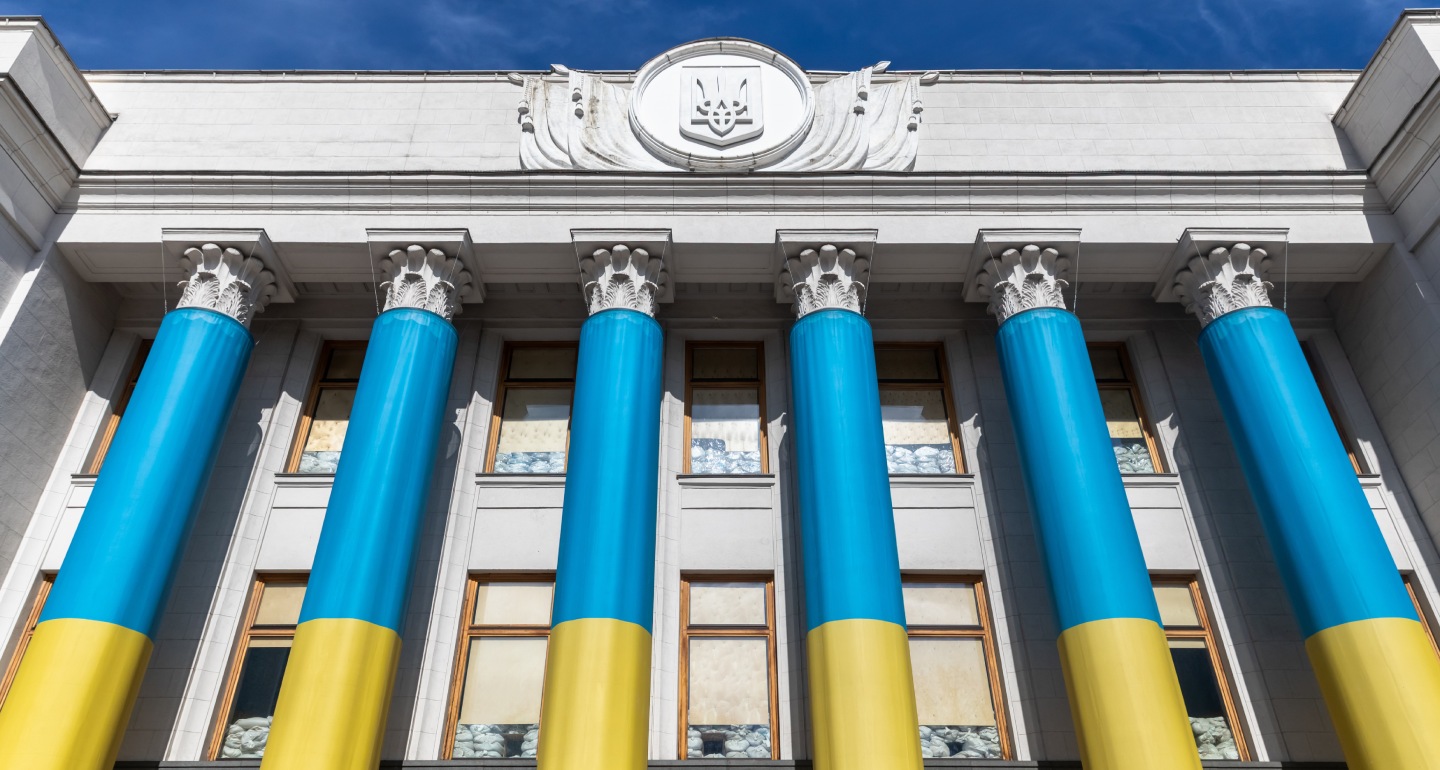
The return of parliamentary politics reflects a broader shift from earlier expectations of a settlement and elections toward the reality of a prolonged war.

Balázs Jarábik
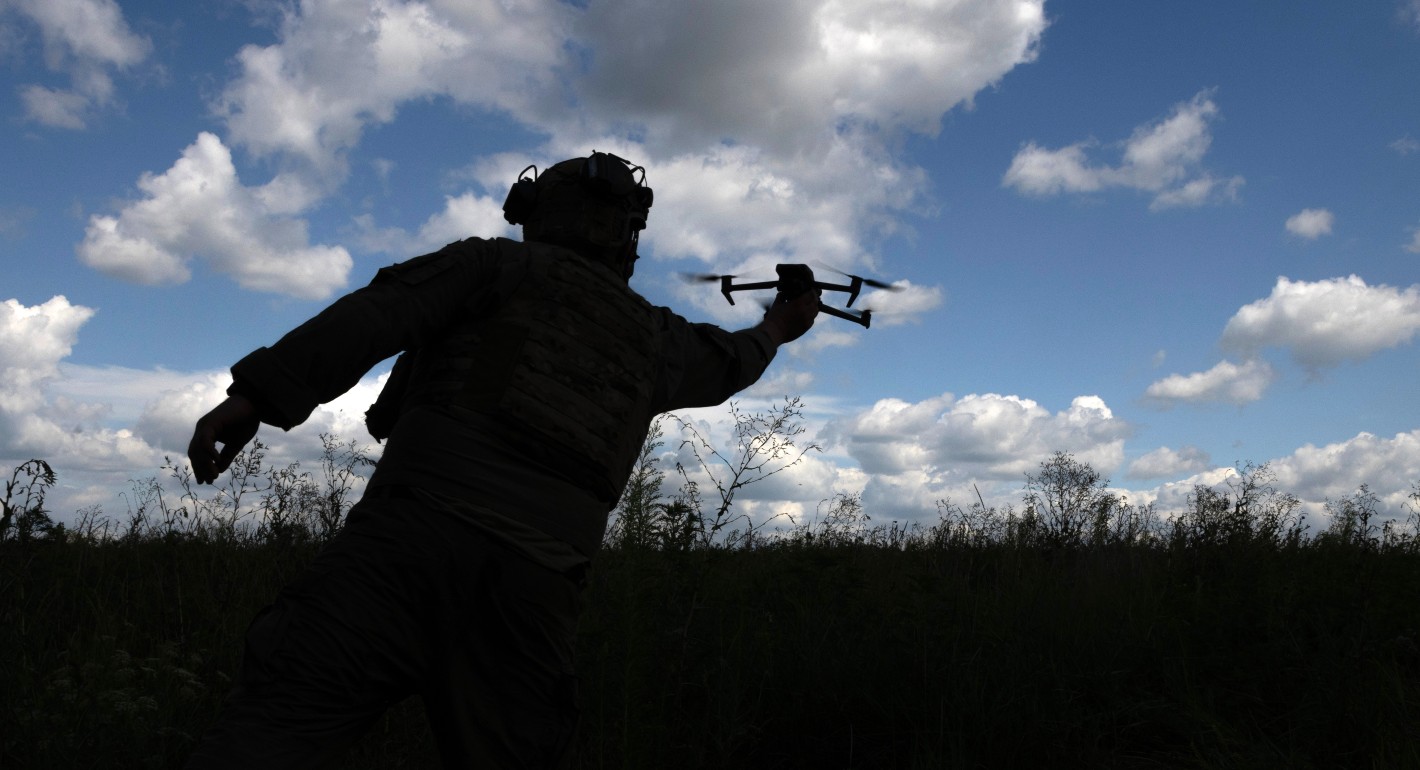
How Ukraine is driving doctrinal change in modern warfare.
Andriy Zagorodnyuk