

Paper
Democratic erosion is undercutting four key elements of U.S. power, with mounting and likely lasting effects.
Thomas Carothers
Source: Getty
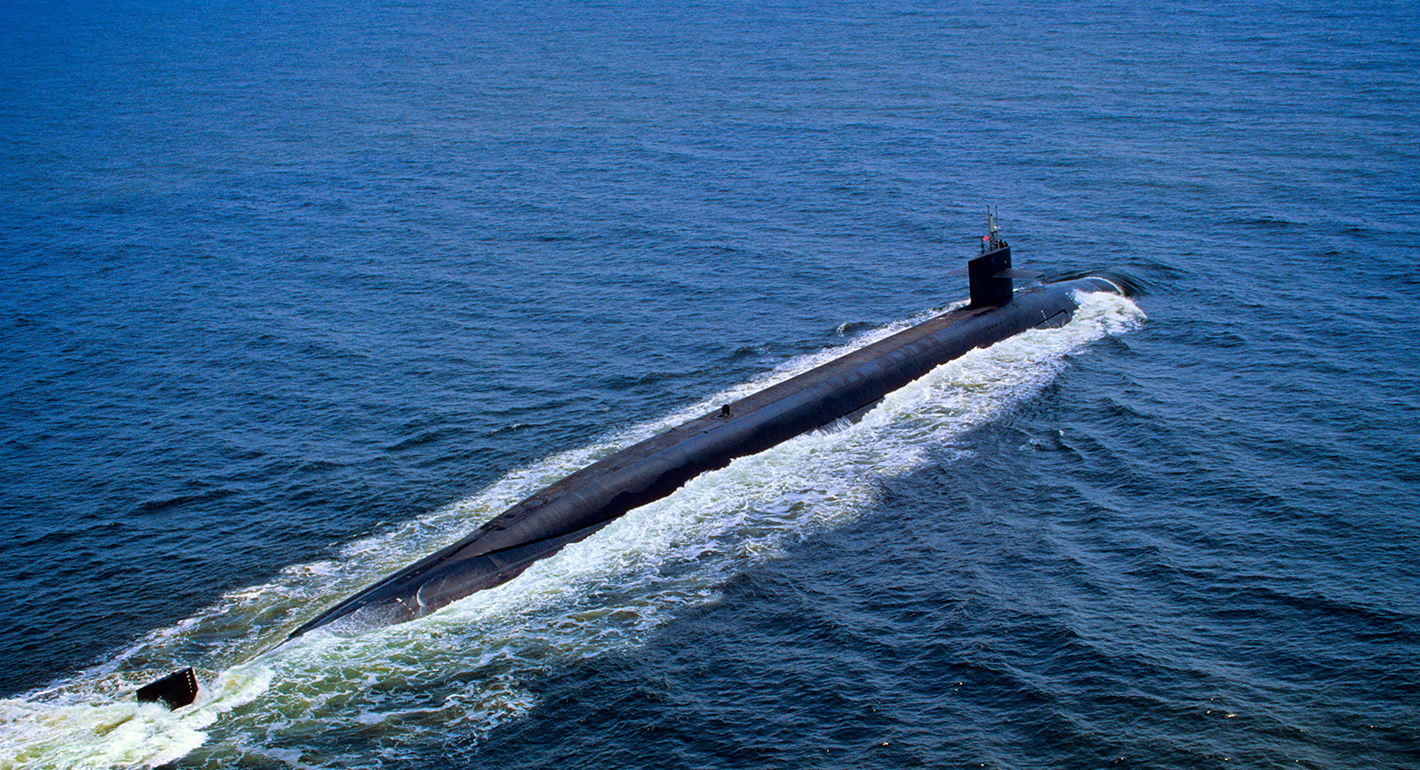
It seems likely that, no matter what, the power of the U.S. nuclear arsenal will face erosion, not least in the credibility of its commitments to defend allies and the political durability of those alliances.
Nuclear weapons so defined international politics in the second half of the twentieth century that this period came to be called the nuclear age. The salience of these weapons waned after the collapse of the Soviet Union but is once again rapidly rising as competition between the United States and its two primary rivals, China and Russia, intensifies. While other forms of power are more important today than they were during the Cold War, the ability of nuclear weapons to kill and destroy on an unparalleled—frankly unimaginable—scale still constitutes power in its rawest, most undiluted form.
The exact relationship between nuclear weapons and power, however, is unclear and contested. The United States’ current nuclear strategy is based, in part, on the premise that, in a nuclear war, “victory is possible.”1 If so, the power conferred by the U.S. nuclear arsenal is declining rapidly in the face of adverse geopolitical shifts, above all the growth of China’s nuclear arsenal and the possibility of Chinese-Russian joint aggression. If, however, that premise is wrong and a nuclear war cannot be won—a position famously articulated by then U.S. president Ronald Reagan and periodically repeated in U.S. public statements—the power of the U.S. nuclear arsenal remains undiminished.2
Unsurprisingly, these two views of nuclear strategy lead to different policy conclusions. If victory is possible, the United States should build up its nuclear arsenal to maintain its power. However, America is not well prepared for the arms race that may ensue. As a result, if the logic underlying the United States’ current nuclear strategy is correct, it seems almost inevitable that the country will see the power of its nuclear weapons decline. By contrast, if numerical advantage does not confer power, there is no benefit to a U.S. buildup that risks fueling an arms race. In either case, however, the power of the U.S. nuclear arsenal will face erosion from other sources, not least the credibility of its commitments to defend allies and the political durability of those alliances.
The power of nuclear weapons is normally measured by their utility in achieving concrete military goals, principally deterring attacks against the United States and its allies. Politicians, policymakers, and theorists in some nuclear-armed states believe that nuclear weapons offer additional benefits beyond these, such as status, negotiating leverage, influence in international institutions, and attractiveness to allies. In short, their theory runs, nuclear weapons create political power.3
By contrast, U.S. political and military leaders rarely, if ever, connect their nuclear arsenal with political power. The reason is perhaps that, until recently, the United States’ preponderance of political power was so overdetermined by its conventional military capabilities, diplomatic muscle, economy, and cultural influence that the question of how much nuclear weapons contributed was largely academic. With U.S. primacy now ebbing, that question becomes more salient.
Nuclear weapons probably do confer political power, but the effect is not a strong one and the benefits are primarily enjoyed by otherwise weak states. Nuclear weapons, for example, have some value for extracting concessions from the international community and the United States especially. North Korea, for example, engaged the United States in over twenty years of stop-start negotiations by using its nuclear program as leverage. Sometimes it won concrete concessions, such as energy aid, but they were limited.4 Moreover, North Korea’s nuclear weapons have not compelled Washington to accept a broader political settlement.
Russia’s large nuclear arsenal also offers Moscow some political value. Nuclear arms control is perhaps the only area in which the United States treats Russia—famously derided by senator John McCain as “a gas station masquerading as a country”—as an equal.5 Russia’s deployment of nuclear weapons to Belarus has recently helped cement Moscow’s suzerainty over Minsk. Yet the political power of Russian nuclear weapons is limited. For example, they did not prevent Ukraine from leaving Russia’s sphere of influence (although they probably contributed to Washington’s reluctance to agree to Ukrainian membership of NATO).
China also shows that the more powerful a state is, the less nuclear weapons add to its political power. Its acquisition of nuclear weapons in the 1960s, when it was weak, enhanced its political power by incentivizing Washington to improve relations and encouraging the Richard Nixon administration’s opening—although Washington’s main motivation was power balancing against the Soviet Union.6 Today, however, China’s political power is built on its conventional military, economic, and diplomatic clout, not its expanding nuclear arsenal (a recent development that Beijing does not emphasize).
Superficially, the United States’ own experience is exceptional. In the Cold War, its vast political power was clearly underwritten by its nuclear forces—though through their effect on allies, not adversaries. The United States, and indeed the North Atlantic Treaty Organization (NATO) as a whole, suffered from a perceived deficit in conventional military power relative to the Warsaw Pact. By helping to offset this imbalance, U.S. nuclear weapons enabled the country’s political leadership of the “free world”—a network of allies that has since grown and remains a central driver of U.S. nuclear policy. After the Cold War, U.S. conventional military power became supreme, and America’s nuclear arsenal ceased to be such an important enabler of its political power. Looking forward, if U.S. relative conventional power continues to wane, especially in the western Pacific, the United States’ ability to maintain political leadership within its alliance networks may again rest on its nuclear arsenal for the same reasons as in the Cold War.
Nuclear weapons have sometimes been branded the “ultimate” or “absolute” weapon,7 but their contribution to military power is limited because, in many situations, threats to use them lack credibility. Consider, for example, that Kyiv has not been cowed by Russia’s nuclear arsenal, continues to try to liberate the four territories annexed by Russia since 2022 despite threats by Russian President Vladimir Putin to use nuclear weapons in their defense, and has even seized some Russian territory in Kursk Oblast.8
The most obvious circumstance in which a threat to use nuclear weapons would be credible would be in the face of an existential danger to a state. U.S. geopolitical goals, however, are more ambitious than survival. Ultimately, therefore, an assessment of how much military power nuclear weapons confer on the United States must begin with what Washington wants from those weapons. Since the end of the Cold War, their role—as described in successive Nuclear Posture Reviews and official statements of policy—has been constant and broadly threefold:
First, U.S. nuclear weapons are intended to deter “strategic attacks,” to use the terminology from the United States’ most recent Nuclear Posture Review.9 “Strategic attack” encompasses “nuclear employment of any scale,” and, circularly, “other high consequence, strategic-level attacks.” (Elsewhere, the review suggests that nonnuclear attacks rise to that level when they threaten “the vital interests of the United States or its Allies and partners.”10) All of the other eight nuclear-armed states assign their nuclear weapons a similar role, albeit slightly broader in some cases and narrower in others.
Second, the United States seeks to use nuclear weapons to “assure” more than thirty allies, mostly in Europe or Asia, that Washington is willing and capable of defending them.11 Using nuclear weapons in this way is largely unique to the United States. France’s contemporary “forward deterrence” initiative and the Warsaw Pact’s collective defense commitments during the Cold War both involve assurance, but only to proximal allies, and neither entails the sort of nuclear sharing or consultative practices that define U.S. extended deterrence.12
Over the decades, Washington has adjusted the size and composition of its nuclear force in the name of assurance—for example, by deploying low-yield nuclear weapons on allies’ soil or conducting highly visible strategic bomber runs to underscore capabilities and commitment. In addition to hardware, Washington has also offered software upgrades in the form of consultative mechanisms to give allies input into U.S. nuclear policy. Extended deterrence, in turn, has given Washington considerable political and military influence over these states, amplifying U.S. power.
Third, if deterrence fails, nuclear weapons may be used to “achieve U.S. objectives” in a nuclear war.13 While all nuclear-armed states plan for such a contingency, U.S. objectives are idiosyncratic in that they include limiting the damage that the United States and its allies would suffer from adversary nuclear strikes.14 To this end, U.S. war plans include the option of preemptive counterforce strikes against adversaries’ nuclear forces, their command and control capabilities, and their political leadership. The goal would be to win a nuclear war by ensuring that the damage wrought on the United States, while unavoidable, is as modest—by the standards of global thermonuclear war—as possible.
The retention of a damage-limitation capability—however it would perform in wartime—is seen, by both Washington and some of its allies, as a way to enhance the credibility of extended deterrence. According to this logic, U.S. promises to defend, say, Estonia with nuclear weapons will only be credible to Tallinn if Washington believes it can survive the ensuing nuclear war.
Today, the central nuclear policy question facing the United States is how big a nuclear arsenal, and what kinds of nuclear weapons, it needs to meet these goals. Observing the growth in China’s nuclear arsenal, many U.S. politicians, military planners, analysts, and pundits argue that the United States needs more nuclear weapons just to maintain its military power. “The size of a nation’s [nuclear] weapons stockpile is a crude measure of its overall strategic capability,” the commander of U.S. Strategic Command agreed in 2021, clearly identifying arsenal size as one measure of national power.15 This view is probably rooted in the experience of conventional warfare, where force size is broadly correlated with military power (adjusting for factors like technology, leadership, training, and morale).
Within this strain of thought, a larger force is necessary to fulfill U.S. deterrence and reassurance goals because the feasibility of nuclear counterforce targeting depends, in part, on the relative size of the United States’ long-range nuclear forces and those of its adversaries. For instance, one generally assumed principle of nuclear targeting today is that two nuclear warheads should be assigned to each adversary intercontinental ballistic missile (ICBM) silo to ensure a high probability of its destruction. As China builds hundreds of silos, adding to a range of targets that have long interested American nuclear planners in Russia, some in the United States see a reason to build up.
Recent diplomatic cooperation between China and Russia provides an additional motivation. Proponents of a buildup argue that the United States must be able to limit damage in a nuclear war not just against China or Russia individually, but also against both states simultaneously should they gang up. U.S. military planners are therefore now contemplating the possibility of fighting a two-front nuclear war; keeping alive some hope of victory requires even more nuclear weapons for damage limitation. In short, under conventional American wisdom, nuclear weapons and nonnuclear weapons have a broadly similar relationship to military power: More is better.16
This logic has been contested by American analysts (mostly, but not exclusively, outside of government) and, more tacitly, by the seven nuclear-armed states that have not pursued counterforce capabilities (that is, all the nuclear-armed states except Russia). This alternative school of thought argues that, as a practical matter, the United States could not meaningfully limit the damage it would suffer in a nuclear war against China or Russia (or perhaps even North Korea).17 It identifies an inescapable condition of mutual nuclear vulnerability between the United States and its great power adversaries. In other words, each possesses survivable enough forces to assure catastrophic damage to the others even after absorbing a large-scale counterforce attack. For thinkers in this school, efforts to acquire damage-limitation capabilities are futile, not least because U.S. adversaries can—and will—take steps to ensure that their nuclear forces remain survivable. Such steps could include augmenting the size of those forces, potentially triggering an arms race.
The same dynamic applies to missile defense, which could complement counterforce operations by absorbing any nuclear weapons not destroyed in a counterforce strike. Historically, missile defense has required the United States to fire several interceptors to reliably destroy a single enemy warhead. This makes missile defense inherently costly—an adversary can field additional warheads far more cheaply than the United States can field interceptors to negate them. Ambitious U.S. homeland defense efforts—U.S. President Donald Trump’s signature Golden Dome initiative being the most recent18—aim to change the cost calculus but, in the process, are likely to spur offsetting buildups in Beijing and Moscow well before they meaningfully blunt either arsenal.
Critics of counterforce generally recognize that there is an assurance deficit. However, they argue that some allies’ very real concerns about the credibility of extended deterrence stem not from the details of U.S. nuclear force structure, but from a fundamental lack of trust in the United States as a security guarantor. A larger U.S. nuclear arsenal is unlikely to overcome the reservations of, say, Germany or Estonia—let alone Denmark, which has recently seen its territory threatened by the U.S. president. In short, the revisionist school recognizes that deterrence and assurance may fail but does not believe that more is the answer.
We will not try to resolve the debate between the two major schools of U.S. strategy here. The fortunate absence of probative empirical evidence—the non-use of nuclear weapons for more than eighty years and the scarcity of crises and conflicts in which nuclear use was plausible—makes it difficult to do so. Here, it suffices to note that the effects of the trends below on U.S. power depend, almost entirely, on how the requirements for deterrence and assurance are defined.
Proponents of the belief that stockpile size matters face a concerning picture. Today, the United States deploys approximately 1,800 nuclear warheads, mostly on long-range ballistic missiles in silos and on submarines, with nearly 2,000 more in storage.19 Around 425 of these deployed warheads, of three different types, have lower-yield options for limited nuclear strikes.
The only other country with quantitatively comparable nuclear capabilities is Russia.20 Its arsenal is probably a few hundred warheads larger than the United States’ but differs in composition. Russia is believed to have more nuclear warheads—“up to 2,000,” according to the U.S. Defense Intelligence Agency—for regional delivery systems but fewer reserve warheads for long-range systems of the kind that could threaten the continental United States.21
As of 2024, China’s nuclear warhead stockpile numbers were in the “low 600s,” according to the U.S. Department of Defense.22 Most of these warheads are for missiles capable of reaching the United States, though day to day, few are deployed on those long-range weapons. China is also developing more sophisticated regional nuclear delivery systems and may also be increasing the number of warheads available for them.
From Washington’s perspective, the ability of its nuclear forces to fulfill their assigned goals faces systemic challenges. Technological developments may threaten the survivability of U.S. nuclear forces, and, even more so, their command-and-control systems (even as such developments potentially also enhance the effectiveness of U.S. counterforce and missile defense capabilities). The two-front war scenario described above could force greater U.S. reliance on nuclear weapons in at least one of the theaters, if not both, as relative conventional power balances grow less favorable against multiple adversaries.
Some officials also argue that changing conventional balances demand a greater variety of delivery systems armed with lower-yield warheads because America’s existing capabilities do not provide enough so-called limited options for tailored responses to regional contingencies.23 But this is unpersuasive. If extant lower-yield options fail to impress either allies or adversaries, it is almost certainly because foreign leaders believe the U.S. president lacks the will to use them in the defense of an ally; providing the president with more capabilities—more options he or she could simply decline—would not change this calculus.
The biggest concerns for the United States are the growth of China’s nuclear forces and fears of Chinese-Russian collusion, which have led many current (and former) officials, military planners, and analysts to call for more nuclear weapons.24 If deterring adversaries and assuring allies require the capability to conduct effective nuclear counterforce attacks, their logic seems unassailable.
Rather than increasing U.S. power, however, proposals to increase the overall size of the U.S. nuclear arsenal seem almost certain to accelerate a self-defeating arms race that will nearly guarantee that America makes no real gains—even if one believes that numerical superiority in nuclear weapons confers power.
For almost the entire post–Cold War period, the U.S. and Russian arsenals of long-range nuclear weapons were limited by a series of agreements that provided transparency and prevented arms racing. Meanwhile, both Russia and the United States cut the number of nuclear warheads for regional delivery systems, though Russia’s stockpile of such warheads remained substantially larger than its U.S. equivalent. With the expiration of New START in February 2026, no arms control agreements remain in force.25 Neither Russia nor the United States are known to have exceeded New START limits. Yet such restraint is unlikely to last much longer. Even aside from China’s nuclear expansion, both Moscow and Washington may feel pressure to build up given the lack of transparency into each other’s posture in the absence of verified arms control.
Current trends suggest that nuclear dynamics between China, Russia, and the United States are becoming increasingly competitive. In 2018, Russia revealed a new array of weapons designed to bypass U.S. missile defenses.26 Partially as a response, the United States installed lower-yield warheads on some Trident D5 sea-launched ballistic missiles and started the development of a nuclear-armed sea-launched cruise missile. Russia’s development of the 9M729 ground-launched cruise missile, which violated the Intermediate-Range Nuclear Forces Treaty and led to the collapse of that agreement, opened the door to a U.S. buildup of nonnuclear missile forces in Asia to combat China.27 China, which was assessed to have warheads numbering in the low 200s in 2019, is rapidly augmenting its arsenal of nuclear warheads and long-range missiles and is “on track to have over 1,000 warheads by 2030.”28
The United States looks likely to start expanding its nuclear forces, initially by “uploading” reserve warheads onto long-range delivery systems (submarine-launched missiles and ICBMs in silos). Moscow will likely respond in kind, both to ensure the survivability of its nuclear forces and because it sees parity with the United States as politically important. Beijing may increase its force requirements yet further, but in any case, will continue its buildup. Meeting counterforce targeting requirements will then require Washington to further increase its nuclear forces, which will likely spark a response in kind from China and Russia.
Given military procurement is intermittent (“lumpy” in economic terms) and slow, the resultant competition will play out over years and decades in an episodic way, but, absent some surprising restraint, a three-way arms race appears to be in the offing. As a result, a U.S. buildup will not achieve the goal of enhancing U.S. military power; rather, it will trigger a full-blown three-way arms race that denies the United States the superiority it seeks.
While the United States contends with the strategic, geopolitical, and technological questions that will shape the role of its nuclear forces in the coming decades, its choices will be sharply constrained by the reality that limitations in its defense industrial base and nuclear security enterprise will severely reduce Washington’s ability to do anything more than sustain its existing force structure, which is undergoing modernization (and even that effort is running very late and far over budget). As a result, Washington is poorly positioned to engage in a sustained longer-term competition on nuclear arms with Russia and China.
Following the end of the Cold War, the United States postured its national nuclear security enterprise—the collection of scientific and industrial facilities that produce and sustain nuclear weapons and their delivery systems—for a more benign world. Today, however, the United States finds itself simultaneously recapitalizing all three legs of the triad plus command and control—a modernization effort on a scale that has not been attempted since the current force was acquired during the Cold War. There is little industrial slack available for expanded or additional nuclear weapons programs.
The Sentinel ICBM program has already gone far enough over budget that it has breached the Nunn-McCurdy cost threshold, triggering a mandatory restructuring review.29 Such challenges have knock-on effects for nonnuclear acquisition programs. For example, the Columbia-class ballistic missile submarine (SSBN) program, while not as far behind schedule as the Sentinel program, occupies so much shipyard capacity that it constrains other naval construction programs.30
There are also sharp constraints in the ability of the United States to produce new plutonium pits for nuclear warheads. In certain years in the Cold War, pit production surged to between one and two thousand.31 Today, limitations on pit production undermine the U.S. ability to compete in a multi-decade arms race that would exhaust the current stockpile of non-deployed warheads. The stated goal of the National Nuclear Security Administration—producing eighty pits per year,32 split between Los Alamos National Laboratory and a repurposed facility at the Savannah River Site—is widely seen as aspirational: Los Alamos has managed only single-digit annual production in recent years, and the Savannah River Plutonium Processing Facility, which is under construction, has faced repeated delays and cost growth.33 This bottleneck defines the upper bound of the achievable, regardless of what strategists determine U.S. requirements to be.
The total cost of nuclear modernization through 2034 is projected by the Congressional Budget Office to reach $946 billion (in 2025 dollars)—a sum that buys a force roughly the same size and structure as the one it replaces.34 The cost per deployed warhead, in real terms, is dramatically higher than during the Cold War.35 While this reflects legitimate improvements in survivability and safety, it also results from the inefficiency of sustaining a bespoke industrial base that has spent much of the post–Cold War period operating at low volumes.
These constraints are compounded by a slow-moving human capital crisis.36 Across the nuclear weapons enterprise and nuclear-adjacent defense industrial base, the specialized skills involved in weapons design, simulation-based stewardship, submarine construction, and solid-rocket motor production are possessed only by a small workforce with few commercial equivalents. Training is slow and attrition is costly—a serious problem given that the nuclear enterprise workforce is aging and the talent pipeline is thin. The weapons laboratories compete for the same technical talent that the private sector attracts with higher salaries. Even with unlimited funding and political will, the ramp-up time for expanding nuclear production capacity would be measured in decades, not years.
China and Russia may not face similar constraints in the long run—at least not to the same degree. China is building its nuclear forces using a relatively modern industrial base that appears designed to feed a growing force—the rapid construction of new silo fields suggests an efficiency that the United States would struggle to match. Russia, meanwhile, retained a Cold War–era production base that, while degraded amid the financial difficulties of the 1990s, was built for high-volume warhead maintenance and missile production and has been sustained through continuous modernization.37
In theory, the United States could square the circle of growing force requirements and limited resources through some form of transparency and mutually agreed restraint—otherwise known as arms control—in order to stabilize the imbalances, conventional and nuclear, that drive arms racing. Indeed, in recent years, Trump has expressed an interest in nuclear (but not conventional) arms control with both China and Russia.38 However, the prospect of imminent breakthroughs is poor—because of both growing international tensions and acrimonious U.S. domestic politics. Regardless, the United States should remain strongly motivated to pursue arms control with both adversaries to ameliorate the structural pressures on the power derived from its nuclear forces. In the days of New START, arms controllers would often quip—not incorrectly—that some of the biggest fans of the treaty were nuclear targeters at U.S. Strategic Command, who got to do their jobs against a numerically bounded set of regularly inspected targets. Success in arms control would further greatly increase the scope for managing the requirements problem under the status quo U.S. nuclear strategy.
If arms control efforts do not succeed, and if U.S. nuclear strategy remains unchanged, preserving—let alone enhancing—the power conferred by nuclear weapons depends on the United States improving its underlying capabilities to build and deploy more nuclear weapons so it can successfully compete in a three-way arms race with China and Russia. Expanding the defense industrial base for both missiles and warheads is presumably not impossible; U.S. production capabilities were much larger in the past. Moreover, some pressure on U.S. nuclear force requirements may be alleviated by U.S. and allied advanced nonnuclear capabilities, such as conventional long-range strike systems. Even so, expanding the U.S. defense industrial base will be slow and expensive. The best case for supporters of current U.S. strategy, therefore, is that the United States surges after initially falling behind in a three-way arms race.
The alternative is to rethink U.S. nuclear strategy and requirements—if not out of strategic considerations, then out of necessity. Whether abandoning counterforce targeting and maintaining a smaller range of limited options would require accepting more risk of a deterrence failure would be a subject of considerable debate. There are hybrid options too. For example, the United States could aim to retain the capability to conduct counterforce strikes against a single great power adversary—probably Russia for the foreseeable future—but adopt a less ambitious approach for a second adversary should simultaneous or sequential nuclear crises arise. Such alternative approaches have not been seriously litigated in official policy processes—such as the interagency Nuclear Posture Review—in the post–Cold War period.
Multiple sources of uncertainty will bear on the role of U.S. nuclear weapons and their broader contribution to U.S. aggregate power.
First, there is uncertainty about the future of arms control. While nearly all analysts would agree that, in 2026, the environment for arms control is dismal, the history of the Cold War demonstrates that major discontinuities—whether negative shocks like the Cuban Missile Crisis or positive shifts like Soviet glasnost—can create unexpected openings. It would be a mistake to over-index on pessimism and assume that the United States will be unable to ameliorate the security environment through arms control over the remainder of the twenty-first century. Moreover, some of the economic, industrial, and strategic constraints facing the United States exist in some form for Russia and China, potentially creating reciprocal interest in engagement.
Second, the United States, like all nuclear-armed states, faces uncertainty around future technological developments, including missile defenses, offensive cyber weapons, and novel nonnuclear weapons, that may threaten the survivability of its nuclear forces. This uncertainty has been an endemic feature of the nuclear age, but U.S. planners will likely become more concerned about survivability and penetrability as some technologies on which the United States has held a near monopoly—exoatmospheric missile defense and conventional precision strike, for example—spread to other states. Moreover, China, as the closest competitor to the United States on the development of artificial intelligence (AI) capabilities, may further stress U.S. planning by its use of advanced AI in surveillance, potentially threatening (or at least appearing to threaten) the survivability of U.S. nuclear forces, SSBNs especially.
Third, it is unclear how close relations between Beijing and Moscow will become. As a result, it is difficult to assess how much attention planners should pay to the possibility of a two-front war.39 The unavoidable policy question is how much risk the United States should accept: Willingness to accept more risk would require fewer changes to U.S. force posture, even absent a change in nuclear strategy.
Finally, U.S. grand strategy is now in greater flux than at any time since the end of World War II. It seems possible that the Trump administration or a like-minded successor may renounce or scale back some or all of the United States’ alliances. Even if Washington does not take such drastic action, it now faces unprecedented doubts about its commitment to extended deterrence.40 After all, the very existence of a serious debate within the United States about whether alliances serve its interests—let alone comments from the current president that suggest they do not—is leading allies to conclude, quite rationally, that Washington would not be willing to fight a nuclear war on their behalf.41
U.S. interest in damage limitation is driven, in large part, by trying to assure allies on precisely this issue.42 If, therefore, the U.S. alliance system collapsed (for whatever reason), it would likely spark a debate within the United States about whether to scale back its nuclear requirements—specifically whether it should abandon damage limitation as a goal.
If U.S. alliances survive, there is uncertainty about how the behavior of allies will change. They may become more assertive in managing their relationships with the United States with implications for U.S. nuclear force requirements, escalation management, and joint operational planning. Future pro-alliance American decisionmakers may find themselves paying a “risk premium” in response to assurance demands by, for instance, agreeing to nuclear deployments in Europe or Asia that might otherwise have been rejected.43
Allies will likely also hedge against longer-term U.S. political unreliability by continuing to seek more autonomous nonnuclear capabilities and perhaps by developing technology and expertise to shorten the time required to develop nuclear weapons. More dramatically, especially if U.S. alliances collapse, but perhaps even if they do not, allies could go further and seek their own nuclear weapons; increasingly, publics,44 strategic elites, and, in rare cases, political decisionmakers in those states evince more willingness to seek the bomb than at any time since the Cold War.45 From the perspective of orthodox U.S. strategy, it is difficult to imagine a development that would degrade the power conferred on Washington by nuclear weapons more than their widespread proliferation.
What is the future of American power? The United States commands extraordinary resources across every dimension of national power, yet in recent years it has struggled to achieve many important foreign policy aims. This paradox raises a key question for Americans and the world: What can the United States actually do with the power it has? Our project examines not just the quantity but the qualities of American power, assesses the degree to which it is eroding, and asks how the United States might use the power it has to better effect.

Jessica T. Mathews Chair, Co-director, Nuclear Policy Program
Acton holds the Jessica T. Mathews Chair and is co-director of the Nuclear Policy Program at the Carnegie Endowment for International Peace.

Stanton Senior Fellow in the Nuclear Policy Program at the Carnegie Endowment for International Peace
Ankit Panda is the Stanton Senior Fellow in the Nuclear Policy Program at the Carnegie Endowment for International Peace.
Carnegie does not take institutional positions on public policy issues; the views represented herein are those of the author(s) and do not necessarily reflect the views of Carnegie, its staff, or its trustees.
Democratic erosion is undercutting four key elements of U.S. power, with mounting and likely lasting effects.

Thomas Carothers

The future of American economic power will be determined by the interplay between Trump’s ambitions and the global backlash against them, as well as economic developments outside the direct control of the government, such as advances in AI.

Peter Harrell
State capacity is, at its core, the ability of governments to do what their citizens ask them to do. The Trump administration’s cuts come against a background of long-term capacity decay.
David E. Lewis

Power assessments shape our perceptions of the limits of the possible, but quantitative rankings and dashboards can provide false confidence.
Nicholas Kitchen
What is the future of American power? The United States commands extraordinary resources across every dimension of national power, yet in recent years it has struggled to achieve many important foreign policy aims. This paradox raises a key question for Americans and the world: What can the United States actually do with the power it has? Our project examines not just the quantity but the qualities of American power, assesses the degree to which it is eroding, and asks how the United States might use the power it has to better effect.