

Article
Thailand is no longer safe for regional activists; neither are Cambodia, Laos, or Vietnam for Thai dissidents who had typically sought refuge in those countries.
Janjira Sombatpoonsiri
{
  "authors": [
    "Nguyễn Khắc Giang"
  ],
  "type": "commentary",
  "centerAffiliationAll": "",
  "centers": [
    "Carnegie China",
    "Carnegie Endowment for International Peace"
  ],
  "collections": [
    "Carnegie China Commentaries"
  ],
  "englishNewsletterAll": "",
  "nonEnglishNewsletterAll": "",
  "primaryCenter": "Carnegie China",
  "programAffiliation": "",
  "regions": [
    "Southeast Asia",
    "China"
  ],
  "topics": [
    "Foreign Policy"
  ]
}
Source: Getty
Hanoi and Beijing have long treated each other as distant cousins rather than comrades in arms. That might be changing as both sides draw closer to hedge against uncertainty and America’s erratic behavior.
For all the reasons that should bind Hanoi and Beijing together—ideological alignment, regime anxiety, export dependence, the weight of geography—they have not forged any real alliance. In fact, just the opposite. The two communist states have long kept each other at arm’s length, which meant that Washington treated Vietnam as one of Southeast Asia’s key “swing states.” That view was pronounced under the Biden administration.
Yet it appears that instead of swinging toward the United States, Vietnam is moving in the other direction as of late. It would be a mistake to view this shift as Hanoi’s newfound affection for Beijing. What has changed is the mutual desire to hedge against a world running adrift. In this environment, pragmatism rules the day. Under new leadership, Hanoi now appears as receptive as Beijing is in welcoming the opportunity to enhance the relationship. Indeed, Vietnam needs an insurance policy against a world increasingly skeptical of American guarantees. China, for its part, has every reason to lock in a consequential Southeast Asian partner in a region the Trump administration has jolted with erratic tariffs and vanishing summitry.
During President Tô Lâm’s recent state visit to Beijing, the elevation of bilateral ties was crystallized in the joint statement which said, “community with a shared future of strategic significance at a higher level in the new era.” Though verbose, it reflects a shifting relationship that is going to rest more on business and trade than on political alignment.
This wasn’t always the case. Under former general secretary Nguyễn Phú Trọng, Vietnam leaned heavily on ideology, party discipline, and socialist fraternity. But alignment on ideology was never quite sufficient to overcome the memory of the 1979 border war, quarrels at sea, or Vietnam’s default instinct to keep its giant neighbor at bay. What has changed under Tô Lâm is the shape of the offer, and the shape of the man receiving it. After a career running the Ministry of Public Security, Tô Lâm is a secret-policeman-turned-pragmatist—one who has concentrated both party and state power into a single leader, a rare feat in Vietnam’s consensus-driven politics.
A pragmatist with enormous political capital is music to Beijing’s ears, given its predilection for working through a single point of decisionmaking. What’s more, Tô Lâm has carried out radical reforms in an attempt to re-engineer the Southeast Asian “star” economy under the banner of a “new era of national rise.” He may speak Vietnamese, but he speaks the same vernacular of economic development that Beijing understands well.
When Tô Lâm arrived in Beijing exactly one year after Xi’s last trip to Hanoi, Beijing had honed its pitch effectively. Xi sold Tô Lâm on infrastructure, supply chains, and a discreet seat at Beijing’s multilateral table.
The economic package China offered is in line with what it does in numerous developing markets: “we can help you build things quickly and cheaply, and by the way, we’re very good at trains.” The offer of building and financing three cross-border, standard-gauge railways connecting Vietnam’s northern belt to Yunnan and Guangxi provinces—starting with a $7.2 billion line from the border town of Lao Cai to the port of Hai Phong via Hanoi—isn’t a huge surprise. High-speed rail was added as a technology field, a not-so-subtle Chinese bid for a slice of Vietnam’s $67 billion north–south HSR megaproject, which is due to break ground by year-end. Tô Lâm, as if to underscore the pivot, took two rides on China’s bullet trains during his trip and lavished public praise on it.
Around the railways sits a wider architecture of economic convergence. The two sides signed thirty-two cooperation documents during the visit, while the joint statement set out plans on supply chains, customs, science and technology, subnational cooperation, and cross-border development. It also gave prominence to transport and logistics connectivity, which fits the broader turn in the relationship: away from grand slogans alone and towards the mechanics of movement, production, and resilience. For Hanoi, that is sensible enough. China is already Vietnam’s largest trading partner, and if the relationship is to remain politically viable, it must produce more than just a swelling trade deficit.
Beijing touts multilateralism but, of course, strongly prefers countries to join its membership-only clubs, not the other superpower’s. On that front, Tô Lâm’s signals were significant. The joint statement spoke warmly of the Shanghai Cooperation Organization (SCO) and said Hanoi was ready to maintain exchanges on the possibility of becoming an SCO partner. It also reaffirmed support for co-operation under China’s four global initiatives. For a country that has long preferred strategic ambiguity and careful wording, this was notable. Hanoi may not be signing up to the Chinese bloc yet, but it is becoming more receptive, at least in language, to Chinese alternatives as the world grows more unpredictable.
None of this amounts to Vietnam abandoning its strategic autonomy. Quite the opposite: it shows Hanoi hedging harder in a more turbulent world. A smaller state living next door to a giant does not need to love that giant to tighten ties. It merely needs to conclude that the external environment is becoming nastier and the old balancers are less dependable.
Three lessons follow. First, China has become increasingly adept at tailoring its package to placate different stakeholders. For the Vietnamese: ideology for the ideologues, infrastructure for the pragmatists, and security coordination for both. Second, the grammar of Vietnam’s hedge is changing. It is now expressed less through distance and more through selective embrace: warmer language, denser institutional links, but continued effort to preserve room for maneuver. Third, in a region rattled by uncertainty, influence belongs not to the power that moralizes eloquently, but to the one that can finance railways, stabilize supply chains, and promise political reassurance without demanding political fealty. For Hanoi, Beijing has made an offer it cannot refuse.

Nguyễn Khắc Giang
Visiting Fellow, ISEAS–Yusof Ishak Institute
Nguyễn Khắc Giang is a visiting fellow with the Vietnam Studies Programme at the ISEAS – Yusof Ishak Institute in Singapore and previously head of the Political Research Unit at the Vietnam Institute for Economic and Policy Research in Hanoi.
Carnegie does not take institutional positions on public policy issues; the views represented herein are those of the author(s) and do not necessarily reflect the views of Carnegie, its staff, or its trustees.
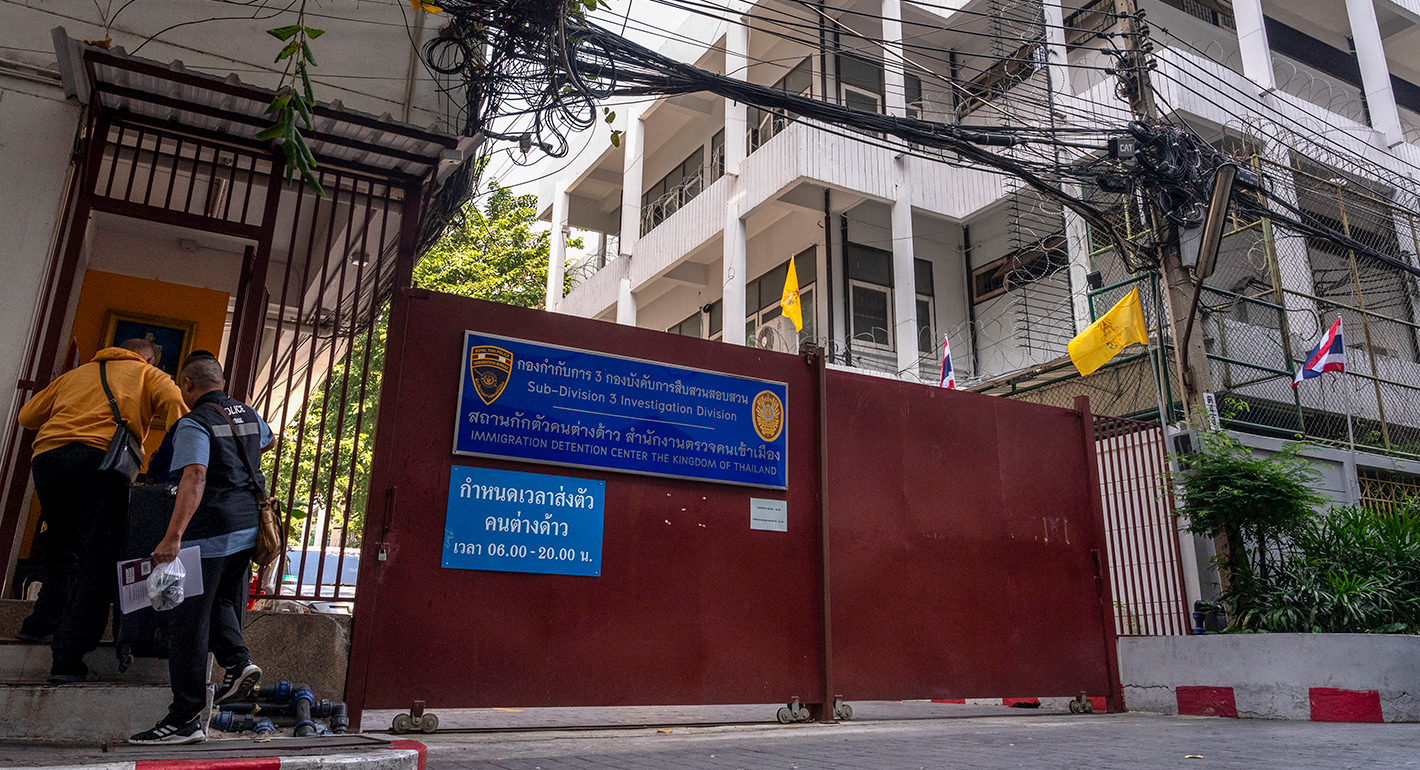
Thailand is no longer safe for regional activists; neither are Cambodia, Laos, or Vietnam for Thai dissidents who had typically sought refuge in those countries.

Janjira Sombatpoonsiri
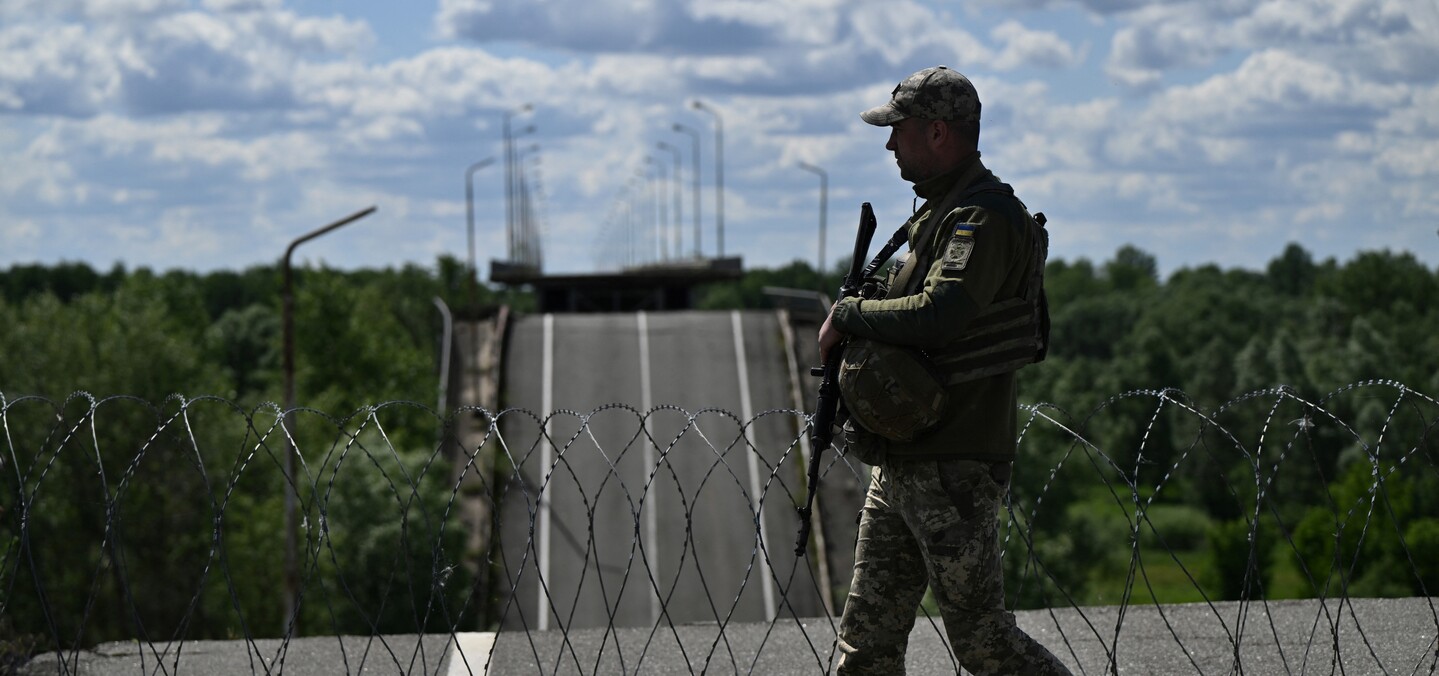
The recent damage inflicted by Ukrainian drones and missiles on Russia has made Belarus aware of its own vulnerabilities—and surprisingly amenable to Kyiv’s demands.

Artyom Shraibman

After the chill in ties between 2020 and 2024 that brought India–China relations to their lowest point in several decades, the two countries have engaged each other afresh. This paper argues that there are predominantly four imperatives guiding India’s approach to China, and they exist in an order of priority.

Saheb Singh Chadha
Middle powers in the region will keep hedging between Washington and Beijing. It’s in the great powers’ interests to play along.

Amr Hamzawy, Kathryn Selfe
Democratic erosion is undercutting four key elements of U.S. power, with mounting and likely lasting effects.

Thomas Carothers